RADAR DAILY™ FINBEAR — February 18, 2026
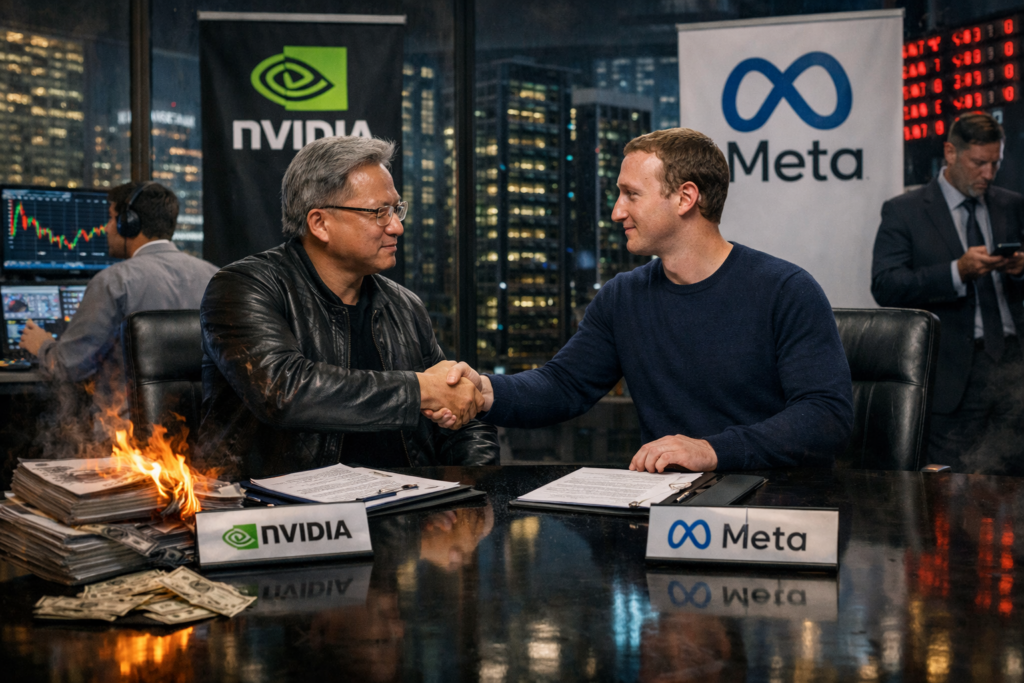
Markets are trying to find their footing after five consecutive down weeks on the Nasdaq and a Presidents’ Day pause that gave nobody time to forget the AI disruption fears still reverberating across software, tech, and crypto.
⚡ In 20 Seconds
- Meta locks in millions of Nvidia GPUs — deal worth tens of billions, spanning Blackwell through Rubin generations
- Japan commits $36B to US energy/minerals — first tranche of $550B tariff deal, SoftBank-led Ohio gas plant at core
- Microsoft pledges $50B for Global South AI — announced at India AI Summit, targeting infrastructure and skills by decade’s end
- Trump backs prediction markets vs states — CFTC files amicus brief for Kalshi/Polymarket in Nevada gambling fight
📌 Key Indicators Dashboard
| Indicator | Value | Change | Signal |
|---|---|---|---|
| S&P 500 | 6,843.22 | +0.10% | ⚪ |
| Nasdaq | 22,578.38 | +0.14% | ⚪ |
| Dow Jones | 49,533.19 | +0.07% | ⚪ |
| VIX | 21.20 | +2.9% | 🔴 |
| US 10Y | 4.05% | -2 bps | 🟢 |
| DXY | 97.18 | +0.12% | ⚪ |
| Gold (spot) | $4,938 | -0.7% | 🔴 |
| Silver (spot) | n/a | n/a | n/a |
| WTI (futures) | $62.36 | +0.2% | ⚪ |
| Brent (futures) | $67.40 | -0.4% | ⚪ |
| EUR/USD | ~1.184 | -0.08% | ⚪ |
| BTC | $68,880 | +0.2% | ⚪ |
| ETH | $1,972 | -1.6% | 🔴 |
| Crypto Fear & Greed | ~13 | — | 💀 Extreme Fear |
Note: Markets were closed Monday for Presidents’ Day. Data reflects Tuesday Feb 17 close (first trading day of the week). Futures indicate S&P +0.50%, Nasdaq +0.57% at the Wednesday open.
🎯 Executive Summary
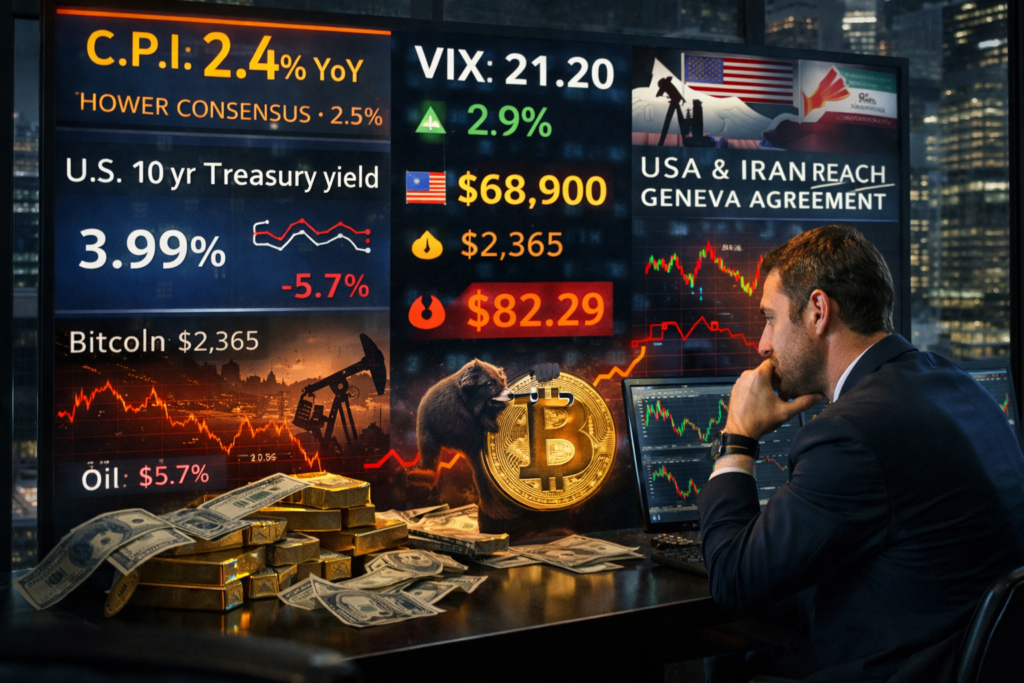
Markets are trying to find their footing after five consecutive down weeks on the Nasdaq and a Presidents’ Day pause that gave nobody time to forget the AI disruption fears still reverberating across software, tech, and crypto. Tuesday’s session was a flatline — nominal gains masking real anxiety. The S&P 500 has erased its 2026 gains, hovering near the year’s opening levels after falling ~2.3% from January highs. The VIX at 20+ signals the market’s “fear premium” isn’t going away.
But beneath the surface churn, capital is moving. Meta just signed what analysts call a “tens of billions” deal with Nvidia spanning multiple chip generations. Microsoft is planting $50 billion worth of AI flags across the Global South. Japan is funneling $36 billion into US energy and critical minerals under the tariff framework. The AI capex machine hasn’t slowed — it’s accelerating. The question is whether the market has the stomach for it, or whether every new billion pledged just amplifies the fear that returns will never justify the spend.
Today’s dominant tension: the AI buildout intensifies even as the market punishes the stocks funding it.
🧠 1. Meta and Nvidia Deepen the Moat — Millions of Chips, One Strategic Lock-In
What happened
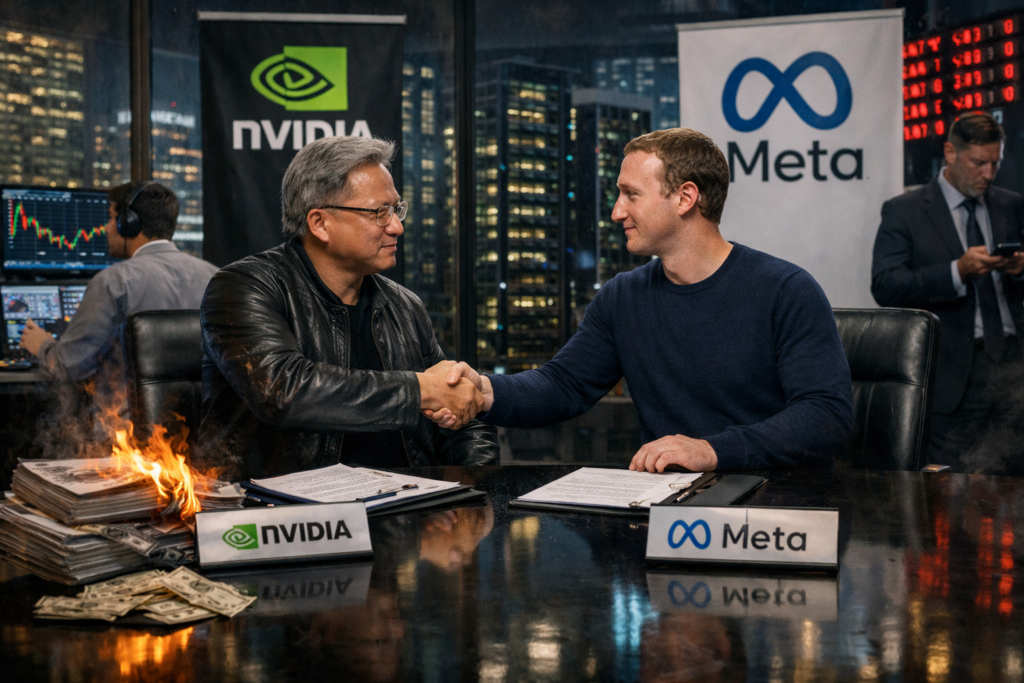
Nvidia and Meta announced an expanded multiyear, multi-generational strategic partnership ✅ (Nvidia press release/CNBC, February 17). Meta will deploy millions of Nvidia Blackwell and next-gen Rubin GPUs, plus Grace CPUs and Spectrum-X networking across its hyperscale data centers ✅. Meta is the first major tech company to deploy Nvidia’s Grace CPUs as standalone chips — separate from GPU servers — for inference and agentic AI workloads ✅ (CNBC). The deal’s financial terms were not disclosed, but analyst Ben Bajarin of Creative Strategies estimated it at “certainly in the tens of billions of dollars” ✅ (CNBC). Meta announced in January plans to spend up to $135 billion on AI in 2026 ✅ (CNBC). Meta CEO Mark Zuckerberg called the partnership crucial to the company’s vision of “delivering personal superintelligence to everyone in the world” ✅. Engineering teams from both companies will work in “deep codesign to optimize and accelerate state-of-the-art AI models” ✅ (Nvidia press release).
What the sources say
“No one deploys AI at Meta’s scale — integrating frontier research with industrial-scale infrastructure to power the world’s largest personalization and recommendation systems for billions of users.” — Jensen Huang, Nvidia CEO ✅ (Nvidia press release)
“The deal is certainly in the tens of billions of dollars. We do expect a good portion of Meta’s capex to go toward this Nvidia build-out.” — Ben Bajarin, Creative Strategies ✅ (CNBC)
FINBEAR Take: The Inference Pivot Is Real
Forget the training arms race for a moment. The biggest signal in this deal isn’t the millions of GPUs — it’s the standalone CPUs. Meta deploying Nvidia’s Grace chips independently, specifically to run inference and agentic workloads, marks a structural shift in how the AI supply chain is being built. Training gets the headlines. Inference will generate the revenue.
This deal is also a direct rebuke to the “peak Nvidia” narrative that has haunted chip stocks in 2026. Just weeks after reports surfaced that Meta was flirting with Google’s TPUs, Zuckerberg signed a multi-generational commitment that runs through Blackwell, into Rubin, and potentially to Vera. That’s not hedging — it’s doubling down. And it comes at a moment when Blackwell GPUs are back-ordered for months and Rubin has just entered production.
The uncomfortable subtext: Meta’s in-house MTIA training chips have reportedly encountered “technical challenges” (Financial Times). The Nvidia deal suggests those homegrown alternatives are further from deployment than hoped. Cui prodest? Nvidia, whose moat just got wider and deeper.
→ FINBEAR Context: In the February 11 RADAR we analyzed ByteDance building custom AI chips with Samsung — a story about reducing Nvidia dependency. Today’s deal is the mirror image: the West’s largest social media company is deepening that same dependency. The semiconductor world is splitting along a clean axis: China decouples, the West locks in.
For investors
- Tickers: $NVDA, $META, $AMD, $CRWV (CoreWeave)
- Opportunity: Nvidia’s order book visibility just extended by years; inference-as-a-service is the next growth vector
- Risk: Meta’s AI capex ($135B in 2026) must eventually translate into revenue — if AI monetization disappoints, both stocks suffer
- Avoid: Assuming this kills the custom chip narrative — Amazon, Google, and Meta itself are all still investing in alternatives
- Bottom line: The AI buildout isn’t slowing. It’s concentrating. Nvidia’s lock-in with the biggest spenders is the clearest signal yet.
Impact: 🟢🟢🟢🟢 (4/5) — Validates hyperscaler GPU demand, extends Nvidia’s multi-year visibility
🏛️ 2. Japan Writes a $36 Billion Check for American Energy — Tariffs as Leverage, Infrastructure as Currency
What happened
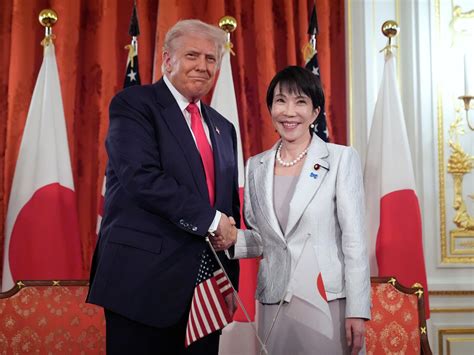
Japan committed $36 billion to three US energy and critical mineral projects, the first tranche of its $550 billion investment fund under the tariff agreement with President Trump ✅ (Bloomberg, February 17-18). The largest project: a $33.3 billion natural gas-fired power facility in Portsmouth, Ohio, expected to produce 9.2 gigawatts — managed by SB Energy, a SoftBank subsidiary ✅ (Commerce Department/Akazawa). A $2.1 billion deepwater crude oil export terminal in Texas (operated by Sentinel Midstream) is expected to generate $20-$30 billion in annual US crude exports ✅ (Commerce Dept.). A $600 million synthetic industrial diamond manufacturing facility in Georgia involves Element Six, a De Beers subsidiary ✅ (Bloomberg). Japanese firms Hitachi, Mitsubishi Electric, Toshiba, and SoftBank are interested in participating ✅ (Akazawa to reporters). Only 1-2% of the $550B mechanism consists of direct cash investments; the majority comes from loans and loan guarantees ✅ (Akazawa, previous statements). PM Takaichi noted the gas infrastructure will power AI data centers ✅.
What the sources say
“Our MASSIVE Trade Deal with Japan has just launched! The scale of these projects are so large, and could not be done without one very special word, TARIFFS.” — President Trump, Truth Social ✅
“We believe this initiative is fully aligned with its core objectives: promoting mutual benefits between Japan and the United States, ensuring economic security, and fostering economic growth.” — PM Sanae Takaichi ✅
FINBEAR Take: Tributary Economics in Action
Strip away the diplomatic niceties and the math is brutal. Japan faced tariffs of 15% on all exports to the US plus punitive auto duties. The price of relief: a $550 billion investment fund, the first $36 billion of which just landed. If Japan declines to fund a selected project, the US can claw back revenues or reimpose tariffs. This isn’t free trade. It’s tributary economics, dressed in the language of “mutual benefit.”
But the strategy is more sophisticated than simple tribute. Japan, which imports 99.7% of its oil, gets direct access to US crude exports and natural gas — diversifying away from Middle Eastern dependence. The synthetic diamond facility targets industrial applications critical for semiconductors and aviation, reducing reliance on China. And the Ohio gas plant? It will power AI data centers, connecting Japan’s investment directly to the AI infrastructure boom.
SoftBank’s presence at the center of the Ohio project is the tell. Masayoshi Son has positioned himself as the bridge between Japanese capital and American AI ambitions. Cui prodest? SoftBank as AI infrastructure landlord, Japan as US energy partner, and Trump who gets to claim his tariff framework is generating real investment.
For investors
- Tickers: $SFTBY (SoftBank ADR), $SMFG (Mitsui), energy infrastructure names
- Opportunity: US LNG/gas infrastructure buildout accelerates; picks-and-shovels plays in pipeline/construction
- Risk: Mostly loans and guarantees, not equity — limited direct market impact on listed stocks
- Avoid: Overreading the headline number — 98% is structured financing, not cash investment
- Bottom line: Tariffs are being monetized into infrastructure. The template for South Korea, Europe, and others is now set.
Impact: 🟢🟢🟢 (3/5) — Strategic significance high, near-term market impact moderate; energy infrastructure narrative strengthened
🧠 3. Microsoft Plants $50 Billion in AI’s Next Frontier — The Global South Play
What happened
Microsoft announced at the India AI Impact Summit in New Delhi that it is on pace to invest $50 billion by the end of the decade to expand AI infrastructure and capabilities across the Global South ✅ (Microsoft blog/Reuters, February 17-18). In its last fiscal year alone, Microsoft invested more than $8 billion in datacenter infrastructure serving developing markets ✅ (Brad Smith, Microsoft blog). The company previously committed $17.5 billion in AI investments in India ✅ (Reuters). Microsoft is pursuing a goal to extend internet access to 250 million people in unserved communities in the Global South, including 100 million in Africa ✅ (Microsoft blog). The program includes skilling 20 million people with AI credentials by 2028 ✅. Microsoft’s AI Diffusion Report shows AI usage in the Global North is roughly twice that of the Global South ✅ (Microsoft blog). Microsoft stock is down more than 17% YTD ✅ (Yahoo Finance).
What the sources say
“For more than a century, unequal access to electricity exacerbated a growing economic gap between the Global North and South.” — Brad Smith, Microsoft Vice Chair & President ✅ (Microsoft blog)
FINBEAR Take: The AI Marshall Plan, With a P&L Attached
There’s something deeply ironic about Microsoft pledging $50 billion to bring AI to the developing world while its own stock has lost 17% of its value in 2026 because investors are terrified of AI capex. The market is punishing Satya Nadella for spending too much on AI even as the company makes the case that AI’s addressable market must include 6 billion people in the Global South to justify the spend.
This is the long game. Microsoft needs AI usage to become as ubiquitous as electricity — not just in Redmond and Manhattan, but in Lagos and Mumbai. The $8 billion already deployed in Global South datacenter infrastructure isn’t charity. It’s market creation. Every Azure instance deployed in India, every Copilot license sold in Southeast Asia, every developer trained on Microsoft tools across Africa — that’s TAM expansion that justifies the capex Wall Street is punishing today.
Cui prodest? Microsoft long-term — if they can build the infrastructure before Google, Amazon, or Chinese alternatives do.
For investors
- Tickers: $MSFT, $GOOG, $AMZN (competitive dynamics)
- Opportunity: Microsoft’s Global South infrastructure buildout creates durable competitive advantages in underpenetrated markets
- Risk: $50 billion is a staggering commitment when the stock is already punished for overspending; no guarantee these markets monetize at US margins
- Avoid: Treating this as near-term catalyst — it’s a decade-long play
- Bottom line: The market is pricing Microsoft like it’s spending recklessly. Microsoft is investing like AI is electricity. One of them is wrong.
Impact: 🟢🟢🟢 (3/5) — Long-term strategic significance, neutral near-term for a stock already under capex pressure
🧠 4. Yotta’s $2 Billion AI Hub — India Becomes Nvidia’s Next Beachhead
What happened
Indian data center company Yotta Data Services will build a $2 billion AI hub using Nvidia’s Blackwell chips ✅ (headline source, February 18). The announcement aligns with the India AI Impact Summit in New Delhi and Nvidia’s broader push to expand AI infrastructure partnerships across Asia.
What the sources say
No direct quotes available from primary sources.
FINBEAR Take: The Blackwell Supply Chain Goes Global
India is Nvidia’s next capacity expansion play. Yotta’s $2 billion commitment follows the template: sovereign-linked capital (Yotta is backed by the Hiranandani Group) meets GPU supply in markets hungry for AI inference capacity. With Nvidia’s Blackwell chips back-ordered globally, securing supply for Indian data centers signals that the Asia-Pacific AI buildout is accelerating — and that Nvidia’s manufacturing partners (TSMC, primarily) will face sustained demand pressure through 2027.
Cui prodest? Nvidia’s revenue diversification beyond US hyperscalers, and India’s ambition to become an AI infrastructure hub rather than just an outsourcing destination.
For investors
- Tickers: $NVDA, Yotta (private)
- Opportunity: Nvidia’s international order pipeline extends; India’s AI infrastructure is investable via infrastructure/cloud adjacencies
- Risk: Execution risk for Indian data center buildout; power grid constraints
- Bottom line: AI infrastructure is now a global arms race, and India just placed its largest order.
Impact: 🟢🟢 (2/5) — Confirms Nvidia demand narrative, but limited direct market impact
🧠 5. Bitcoin’s Software Correlation — The Sell-Off That Connects Everything
What happened
A growing body of analysis highlights a “huge correlation” between Bitcoin and enterprise software stocks, with both declining sharply in 2026 ✅ (headline source). Bitcoin plunged from October 2025 highs near $126,000 to a low of $60,062 on February 6 — a 52% drawdown ✅ (Yahoo Finance/CoinDesk). The Crypto Fear & Greed Index hit a YTD low of 4 in early February ✅ (Bankless Times/CoinStats). Strategy (formerly MicroStrategy) purchased 2,486 BTC for $168.4 million at an average price of ~$67,710 per BTC ✅ (SEC filing, February 17), bringing total holdings to 717,131 BTC at an overall average cost of ~$76,027 — leaving the company with ~$5.7 billion in unrealized losses ✅ (CoinMarketCap). BlackRock ETF outflows hit $360 million last week ✅ (CoinMarketCap). Bitcoin has partially recovered to ~$68,880 but the Fear & Greed Index remains in “extreme fear” at approximately 13 ✅ (CoinStats).
What the sources say
“The main driver right now is fear. Fear that we’ll go lower.” — Danny Nelson, Bitwise Research Analyst ✅ (CoinDesk)
FINBEAR Take: When “Digital Gold” Behaves Like Enterprise SaaS
The correlation between Bitcoin and software stocks is the market telling you something uncomfortable: both are duration assets priced on future cash flows (or in Bitcoin’s case, future adoption). When rates stay elevated and the AI narrative shifts from “everything benefits” to “only picks and shovels win,” both get repriced simultaneously.
The $8.7 billion in realized Bitcoin losses last week — second only to the 3AC collapse — suggests capitulation, not correction. Strategy sitting on $5.7 billion in paper losses while continuing to buy is either conviction or insanity, depending on your time horizon. The institutional “hands” that were supposed to stabilize Bitcoin via ETFs are instead generating $360 million in weekly outflows.
→ FINBEAR Context: In the February 10 RADAR we flagged Bitcoin hovering near $70,000 amid what analysts called “a mere crisis of confidence” with Fear & Greed at 9. Twelve days later the fear has barely lifted (now ~13) and the correlation with software names has tightened. This isn’t crypto-specific — it’s a broader repricing of speculative duration.
Cui prodest? The conviction holders accumulating at $60,000-$70,000 — if they’re right about the cycle. The bears pointing to $50,000 targets — if the correlation with software deepens.
For investors
- Tickers: $BTC, $COIN, $MSTR (Strategy), $IBIT (BlackRock BTC ETF)
- Opportunity: Historically, extreme fear readings have preceded major reversals — but timing is everything
- Risk: ETF outflows, miner production costs (~$77,000), and the software correlation all suggest more pain if equities weaken further
- Avoid: Treating the bounce from $60K to $69K as the bottom — the range could hold for months
- Bottom line: Bitcoin is trading like a tech stock, not a hedge. Act accordingly.
Impact: 🔴🔴🔴 (3/5) — Crypto correlation with equities tightening; institutional confidence eroding
🧱 6. Infineon Flags Humanoid Robot Chips — The Next Silicon Frontier
What happened
Infineon CEO flagged growth prospects for chips used in humanoid robots ✅ (headline source, February 18). The German chipmaker sees an expanding addressable market as robotics companies scale from prototype to production.
FINBEAR Take: The Early Innings of a Multi-Decade Cycle
Infineon isn’t a GPU maker. It makes the “boring” chips — power semiconductors, sensors, microcontrollers — that actually make robots move, balance, and interact with the physical world. Every humanoid robot needs dozens of Infineon-class components. If humanoid robots scale from thousands to millions of units (as Tesla, Figure AI, and Chinese competitors project), Infineon’s TAM expands dramatically.
This is the picks-and-shovels play for the next wave of AI — not the training/inference cloud story, but the embodied AI story. Early, but worth watching.
For investors
- Tickers: $IFNNY (Infineon ADR), $TXN, $ON, $STM
- Opportunity: Power semiconductors and sensors for robotics is a nascent but rapidly growing market
- Risk: Humanoid robot mass production timelines remain uncertain; 2027+ for meaningful volumes
- Bottom line: If you believe the robot thesis, the chip suppliers are the first to benefit.
Impact: 🟢🟢 (2/5) — Early signal, limited near-term revenue impact
🏛️ 7. Oil Steady as US-Iran Nuclear Talks Signal Progress
What happened
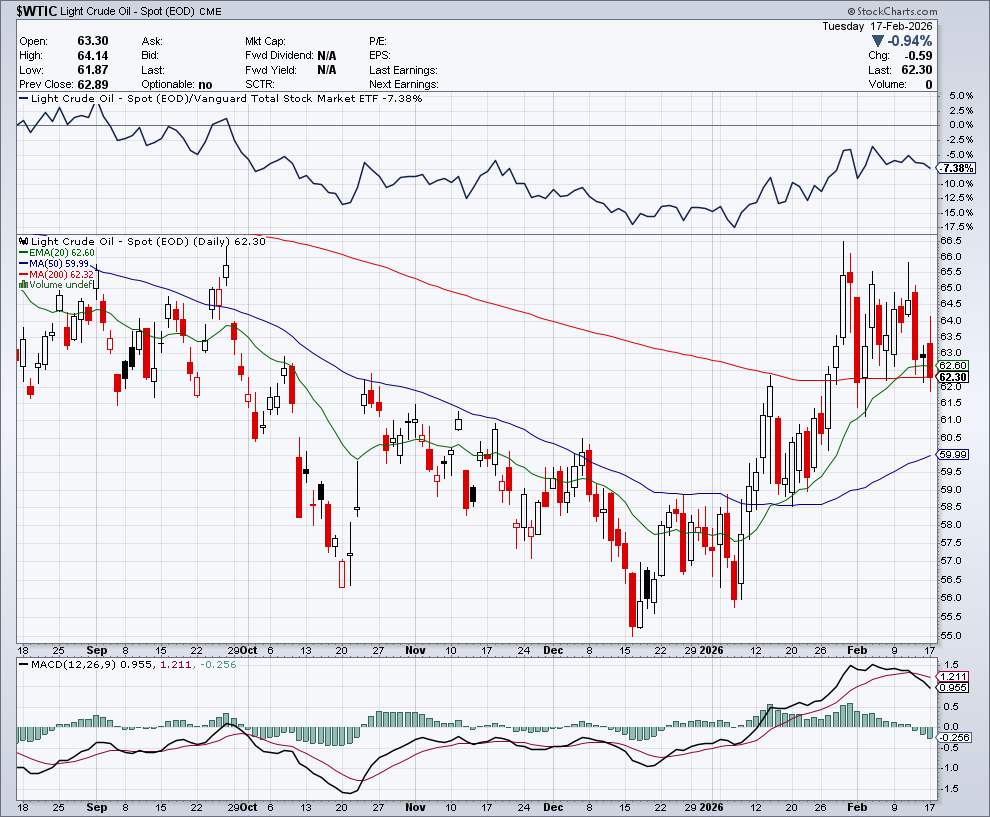
Oil prices steadied as both the US and Iran signaled progress in nuclear negotiations ✅ (headline source). Brent fell to $67.40 after previous sessions of gains ✅ (TradingEconomics). The US issued a warning to American-flagged ships to avoid Iranian waters while transiting the Strait of Hormuz ✅ (TradingEconomics). President Trump described talks as “very good” while Tehran called them “a step forward” but reiterated it will not abandon uranium enrichment ✅ (TradingEconomics). India’s trade deal with the US was linked to a freeze on Russian oil imports ✅ (TradingEconomics).
FINBEAR Take: The Risk Premium Giveth and Taketh Away
Oil prices soared in recent weeks on Iran escalation fears. Now the pendulum swings: diplomatic “progress” removes risk premium faster than fundamentals can replace it. But the structural oversupply narrative hasn’t changed — OPEC+ output hikes, strong US/Canadian/Brazilian production, and weakening demand growth all point to a well-supplied market.
The India-Russia oil angle is the wildcard. If India truly halts Russian crude purchases (unconfirmed), it reshuffles global oil flows in ways that could temporarily tighten Atlantic Basin supply.
Cui prodest? The US negotiating position strengthens if oil prices stay subdued — lower energy costs give the White House more leverage on Iran.
For investors
- Tickers: $USO, $CL, $BNO
- Opportunity: Range-bound trading between $58-$68 WTI; sell rallies above $65
- Risk: Talks collapse, Iran escalation returns, and $75+ is back in play
- Bottom line: Diplomacy is the enemy of the oil bull right now.
Impact: ⚪⚪⚪ (3/5) — Geopolitical risk premium deflating, structural oversupply intact
⚖️ 8. Prediction Markets vs. The States — Trump’s CFTC Picks a Side
What happened
CFTC Chairman Michael Selig, appointed by Trump, filed an amicus brief supporting Kalshi and Polymarket in their legal battle against state gambling regulators ✅ (AP, February 17). Nevada’s Gaming Control Board obtained a temporary restraining order against Kalshi ✅ (AP). Kalshi has appealed to the 9th Circuit ✅ (AP). Roughly 90% of Kalshi’s trading volume goes to sports wagers ✅ (AP). Kalshi saw $1 billion+ in Super Bowl trading volume ✅ (AP). Selig’s “Innovation Advisory Committee” includes CEOs of Polymarket, Kalshi, Coinbase, Robinhood, FanDuel, and DraftKings — but no consumer advocates ✅ (AP). Trump Jr. has invested in Polymarket and is a strategic advisor for Kalshi ✅ (AP). Selig wrote in the WSJ: “The CFTC will no longer sit idly by while overzealous state governments undermine the agency’s exclusive jurisdiction” ✅ (AP/WSJ).
FINBEAR Take: When “Innovation” Looks a Lot Like Gambling
Let’s cut through the euphemisms. When 90% of your trading volume is sports betting, you’re a sports book with a derivatives wrapper. The CFTC’s argument — that prediction markets are “hedging instruments” like oil futures — is intellectually creative but practically absurd for Super Bowl wagering.
The real battle is jurisdictional. If CFTC federal oversight preempts state gambling laws, prediction markets can operate in all 50 states, even where gambling is illegal. That’s an enormous market expansion — and Nevada, which built an economy on controlling gambling, is fighting for survival.
The conflict-of-interest layer is thick enough to cut with a knife. The president’s son has financial ties to both platforms. The CFTC chairman’s advisory committee is packed with industry CEOs. And the policy shift directly benefits the regulated entities.
Cui prodest? Kalshi and Polymarket get federal air cover. The Trump family has direct financial exposure. Nevada’s $16 billion gaming industry faces existential regulatory competition.
For investors
- Tickers: $DKNG (DraftKings), $FLUT (Flutter/FanDuel), $COIN (Coinbase — advisory role)
- Opportunity: If federal preemption holds, prediction markets become a major new asset class; DraftKings/Flutter benefit from the regulatory blurring
- Risk: Courts could reject CFTC’s jurisdictional claim; state-level backlash grows
- Avoid: Assuming this is settled — the 9th Circuit fight will take months
- Bottom line: The line between “derivatives market” and “sports book” is being redrawn by the people who profit from erasing it.
Impact: ⚪⚪⚪ (3/5) — Regulatory reshuffling with major long-term gambling industry implications
🧾 9. ARKK’s Five-Year Reckoning — Cathie Wood’s -50% Milestone
What happened
ARK Innovation ETF ($ARKK) completed a 10-day losing streak earlier this month, its longest on record ✅ (Bloomberg, February 17). Over the past five years, ARKK is down more than 50%, while the Nasdaq 100 gained 80% ✅ (Bloomberg). ARKK returned 35.49% in 2025, beating the S&P 500 ✅ (Yahoo Finance/247 Wall St.). ARKK is down ~9.58% YTD in 2026 ✅ (247 Wall St.). Tesla, ARKK’s largest position at 11.12%, is down 7.18% YTD ✅. Coinbase, at 3.55%, crashed 27.34% YTD ✅. Palantir, at 3.19%, is down 26.07% YTD despite beating Q4 earnings ✅. ARKK has gained 18%+ annually over the past three years, ranking in the top 8th percentile of Morningstar’s mid-cap growth category ✅ (Morningstar via Bloomberg).
What the sources say
“While some of her predictions have not panned out, Cathie has always been very truthful about what the ETFs will invest in and she’s never wavered from that. The ‘tourists’ have left and the true fans remain.” — Eric Balchunas, Bloomberg Intelligence ✅
“It’s exceptionally rare for an active manager to be ‘right’ for a long period of time.” — Dave Nadig, ETF.com ✅
FINBEAR Take: The Innovation Paradox, Personified
Cathie Wood is simultaneously one of the best and worst performing fund managers in recent history — it just depends on when you start the clock. Top 5th percentile over 10 years. Near the bottom over five. Up 35% in 2025. Down nearly 10% in six weeks of 2026. This isn’t inconsistency — it’s exactly what concentrated, high-conviction thematic investing looks like through a full cycle.
The -50% five-year number is devastating as a headline. But it obscures a more nuanced story: ARKK’s heaviest drawdowns correlate perfectly with rate-hike cycles and risk-off rotations. The fund is a pure bet on disruptive innovation — and innovation pays off in clusters, not linearly. The problem isn’t the thesis. It’s the entry point. Investors who bought at the 2021 peak are underwater. Investors who bought in late 2022 are well ahead.
Cui prodest? The index fund industry, which uses ARKK’s volatility as a cautionary tale. But also contrarian investors who recognize that the “tourists have left” — and that’s when active management can work.
For investors
- Tickers: $ARKK, $TSLA, $COIN, $PLTR
- Opportunity: If you believe in the disruptive innovation thesis, ARKK near multi-year lows is structurally cheaper than it’s been since 2022
- Risk: Concentrated portfolio (Tesla 11%+) amplifies single-stock risk; crypto exposure via Coinbase adds volatility
- Avoid: Anchoring to the 2021 peak price — that number is irrelevant
- Bottom line: ARKK is a volatility instrument, not a core holding. Use it that way.
Impact: 🔴🔴 (2/5) — Symbolic milestone, limited systemic importance; the “innovation premium” keeps shrinking
🧾 10. Western Digital Sells SanDisk Stake for $3.17B — Debt Surgery in the Memory Ward
What happened
Western Digital will sell a partial stake in SanDisk for $3.17 billion to reduce debt ✅ (headline source, February 18). The company completed its separation from the NAND flash business last year and is now monetizing remaining holdings.
FINBEAR Take: Cleaning the Balance Sheet
This is corporate housekeeping, not a strategic pivot. Western Digital spun out its flash memory business and is now selling down its residual stake to de-lever. In a memory market still dealing with price volatility and overcapacity cycles, getting cash for equity is the prudent move. The $3.17 billion will give WDC breathing room to focus on its HDD business, which has quietly become the backbone of AI-era data storage.
For investors
- Tickers: $WDC, $STX (Seagate — competitor)
- Opportunity: WDC de-leveraging improves credit profile; HDD business benefits from AI data growth
- Risk: NAND market weakness could suppress SanDisk stake valuation
- Bottom line: Balance sheet repair. Necessary, not exciting.
Impact: ⚪⚪ (2/5) — Corporate restructuring, limited broader market implications
🥇 11. Gold Regains Ground After Two-Day Drop — The Floor Holds
What happened
Gold steadied near $4,938 per ounce after falling sharply over two sessions ✅ (TradingEconomics, February 18). Trading volumes were thin due to Chinese New Year holiday and Presidents’ Day ✅ (Investing.com). Softer US CPI data (2.4% annual, below forecast of 2.5%) reinforced expectations of Fed rate cuts, supporting gold ✅ (TradingEconomics). PBoC extended gold purchases for the 15th consecutive month ✅ (TradingEconomics). Geopolitical risks from US-Iran tensions provided a floor ✅.
FINBEAR Take: Consolidation, Not Capitulation
The two-day pullback from above $5,070 to $4,938 is noise, not signal. Gold is consolidating within its structural uptrend after the January spike to $5,594 and the Warsh-nomination crash to $4,400. The fundamentals haven’t changed: central bank buying at 800+ tonnes annually, a weaker dollar trajectory, softer CPI reinforcing rate-cut expectations, and persistent geopolitical risk.
→ FINBEAR Context: In the February 11 RADAR we called $5,000 “no longer a ceiling — it’s a floor” and noted every major bank targeting $6,000+ by year-end. A brief dip below $5,000 doesn’t invalidate that thesis. The PBoC’s 15th consecutive month of buying confirms the structural bid.
For investors
- Tickers: $GLD, $GDX, $NEM, $GOLD
- Opportunity: Dips toward $4,800-$4,900 remain accumulation zones within the structural bull
- Risk: Strong dollar reversal or hawkish Fed surprise could test $4,600
- Bottom line: Buy the dips. The central bank bid isn’t going away.
Impact: 🟢🟢🟢 (3/5) — Structural bull intact; short-term consolidation within long-term uptrend
📊 12. FOMC Minutes, Occidental Earnings, Housing Data — The Catalyst Calendar
What happened
Key events this week: FOMC minutes from the January meeting release Wednesday (February 18) ✅. Occidental Petroleum ($OXY) reports earnings ✅. US housing data due ✅. Initial jobless claims Thursday ✅. GDP Q4 data and PMIs Friday ✅. The Fed held rates at 3.50-3.75% in January, and markets price two rate cuts this year, likely June and September ✅ (TradingEconomics). CPI last Friday came in at 2.4% annual, below the 2.5% consensus ✅. NFP earlier in the week was stronger than expected ✅.
FINBEAR Take: The Minutes Are Already Stale
The FOMC minutes reflect a meeting that occurred before the softer CPI print and before five straight down weeks on the Nasdaq. Whatever hawkish/dovish signals emerge are already priced in. The real question: does the market use any hawkish language as an excuse to sell further, or does the soft CPI provide enough cover for a relief rally?
Occidental earnings matter for energy sector sentiment, not the index. The housing data is the sleeper — if housing weakness confirms the consumer slowdown narrative, rate-cut expectations accelerate.
For investors
- Tickers: $OXY, $SPY, $TLT
- Catalyst: FOMC minutes at 2:00 PM ET Wednesday
- Bottom line: The market needs a reason to stop selling. The calendar might provide one — or deepen the malaise.
Impact: ⚪⚪ (2/5) — FOMC minutes backward-looking, but housing data could move rate expectations
📊 Aggregate Sentiment Table
| Cluster | Story | Sentiment | Score |
|---|---|---|---|
| 🧠 AI & Tech | Meta-Nvidia Mega-Deal | Bullish | +7 |
| 🏛️ Geopolitics | Japan $36B US Energy Investment | Bullish | +4 |
| 🧠 AI & Tech | Microsoft $50B Global South | Bullish/Strategic | +3 |
| 🧠 AI & Tech | Yotta $2B India AI Hub | Bullish | +2 |
| 🧠 AI & Tech | Bitcoin-Software Correlation | Bearish | -6 |
| 🧱 AI Infrastructure | Infineon Humanoid Robot Chips | Bullish | +2 |
| 🏛️ Geopolitics | US-Iran Nuclear Progress / Oil | Neutral | 0 |
| ⚖️ Regulation | Prediction Markets vs States | Mixed | -1 |
| 🧾 Corporate | ARKK -50% Five-Year Milestone | Bearish | -4 |
| 🧾 Corporate | Western Digital SanDisk Sale | Neutral | 0 |
| 🥇 Precious Metals | Gold Consolidation | Bullish | +3 |
| 📊 Macro/Earnings | FOMC Minutes + OXY + Housing | Neutral | 0 |
| Net Score | +10 |
🎭 Fear & Loathing on Wall Street™
Component Scores
NSS (Narrative Sentiment Score): +10
The AI capex trifecta (Meta-Nvidia, Microsoft $50B, Japan $36B) drives a net positive narrative score of +10 per the Aggregate Sentiment Table. But context matters: every capex headline is being read as a margin threat, not a growth signal. ARKK’s -50% milestone, Bitcoin’s software correlation, and the Nasdaq’s fifth consecutive losing week weigh heavily. The Dow and S&P have fallen in four of the last five weeks. The headline tape is cautiously positive, but the undertone is defensive.
MBD (Market Behavior Divergence): -25
VIX at 21.20 remains elevated against essentially flat index moves — the market is pricing in more fear than it’s expressing through selling. S&P 500 has erased its 2026 gains, falling ~2.3% from January highs. The Crypto Fear & Greed Index at ~13 is deep in “extreme fear” territory, just points above the YTD low of 4 hit in early February. BTC’s 52% drawdown from October highs mirrors the kind of implosion typically associated with bear markets, not corrections. The gap between VIX levels and actual realized vol suggests hedging demand is outpacing selling pressure — a coiled spring that could resolve in either direction.
PSM (Positioning Sentiment Metric): -20
BlackRock Bitcoin ETF outflows at $360M/week signal institutional risk reduction. ARKK’s 10-day losing streak — the longest in the fund’s history — indicates systematic de-risking of innovation/thematic exposure. Software sector ETFs ($IGV) remain in a death cross pattern. Counterweight: hyperscaler capex commitments ($650B combined for 2026) show the institutional money isn’t leaving AI — it’s just migrating from public equities to direct infrastructure deployment. The disconnect between capex confidence and equity market fear is the defining positioning tension of February 2026.
Calculation
| Component | Score | Weight | Weighted |
|---|---|---|---|
| NSS | +10 | × 0.4 | +4.0 |
| MBD | -25 | × 0.4 | -10.0 |
| PSM | -20 | × 0.2 | -4.0 |
| Subtotal | -10.0 | ||
| FINAL INDEX | × 2 | -20 |
⚪ NEUTRAL — LOWER EDGE (-20/100)
The market sits at the exact boundary between neutral and anxiety — a no-man’s-land that captures the current tension better than any single label. The headline narrative is net positive (Meta-Nvidia, Japan $36B, Microsoft $50B), but market behavior tells a different story: VIX above 21, crypto in extreme fear territory, and positioning firmly defensive. Companies are spending more aggressively on AI than ever. Stocks are being punished more aggressively for that spending than ever. Until one side blinks — either capex slows or the market capitulates into a proper washout — this tension persists.
The divergence is the story. A +10 narrative score coexisting with -25 market behavior and -20 positioning is the classic “wall of worry” configuration — where good news is absorbed without conviction, and a single surprise (hawkish FOMC minutes, a Walmart miss) can tip the balance into full anxiety.
Key threshold to watch: A move below -50 (into FEAR) would require either a failed FOMC minutes reaction, a Bitcoin break below $65,000, or another major AI disruption headline hitting an unprepared sector.
🔗 Cross-Cutting Synthesis
Two forces are colliding in today’s market — and the collision is producing more heat than light.
Force One: The AI capex machine is accelerating. Meta signs a multi-generational deal with Nvidia worth tens of billions. Microsoft pledges $50 billion for the Global South. Japan funnels $33 billion into gas infrastructure explicitly to power AI data centers. Yotta commits $2 billion for Nvidia Blackwell in India. Hyperscalers are on pace for $650 billion in combined capex this year. The buildout is global, relentless, and expanding.
Force Two: The market is punishing the builders. Microsoft is down 17% YTD. The Nasdaq has posted five consecutive losing weeks. ARKK is down 50% over five years. Bitcoin correlates with software stocks on the way down. The Crypto Fear & Greed Index sits at 13. Every new capex announcement is read as a threat to margins, not a vote of confidence in AI’s future.
These two forces cannot coexist indefinitely. Either the capex translates into revenue — in which case the market’s punishment is a generational buying opportunity — or the capex proves excessive, and the correction has further to run. There is no middle ground.
The Japan-US deal connects these threads in an unexpected way. The $550 billion investment framework isn’t just about tariffs — it’s about who builds the physical infrastructure that AI requires. Gas plants. Export terminals. Diamond manufacturing for semiconductors. The AI revolution runs on atoms, not just bits. Cui prodest?
- Nvidia — every deal this week reinforces its monopoly on AI compute
- Energy infrastructure — AI’s insatiable power appetite turns gas plants into strategic assets
- Contrarian investors — extreme fear readings across crypto, software, and innovation have historically preceded recoveries
- The regulatory complex — from prediction markets to AI policy, Washington is picking winners in real time
🚨 Strategic Alerts for Wednesday
- FOMC minutes (2:00 PM ET): Watch for any language on balance sheet normalization or hawkish minority dissents — the market is primed to overreact
- AI sentiment: Meta-Nvidia deal should provide a counter-narrative to “peak AI spend” fears — monitor whether chip stocks rally or remain under pressure
- Gold: $4,900 is the line. Below that, the short-term narrative shifts; above $5,000, bulls retake control
- BTC: $65,000 support is critical. A break would trigger another liquidation wave. Monitor ETF flows daily
- Catalyst: Walmart (WMT) reports Thursday — the consumer spending bellwether in a week that needs good news
📜 Disclaimer & Fantiborsa Maxim™
🛡️ FINBEAR™ Disclaimer:
This document is not financial advice, nor an investment recommendation. It is an independent analysis for educational and informational purposes only.
When the market punishes you for spending on the future, remember: the market also punished Amazon for 20 years. They seem to have survived.
🎭 Fantiborsa Maxim™ of the day:
“The market can remain terrified of AI spending longer than AI companies can remain patient with the market. But only one of them has a balance sheet.”
📡 RADAR DAILY™ FINBEAR — February 18, 2026
© FINBEAR™ | Fantiborsa™ | Powered by Pythia™