RADAR PRO ELITE™ FINBEAR — October 22, 2026
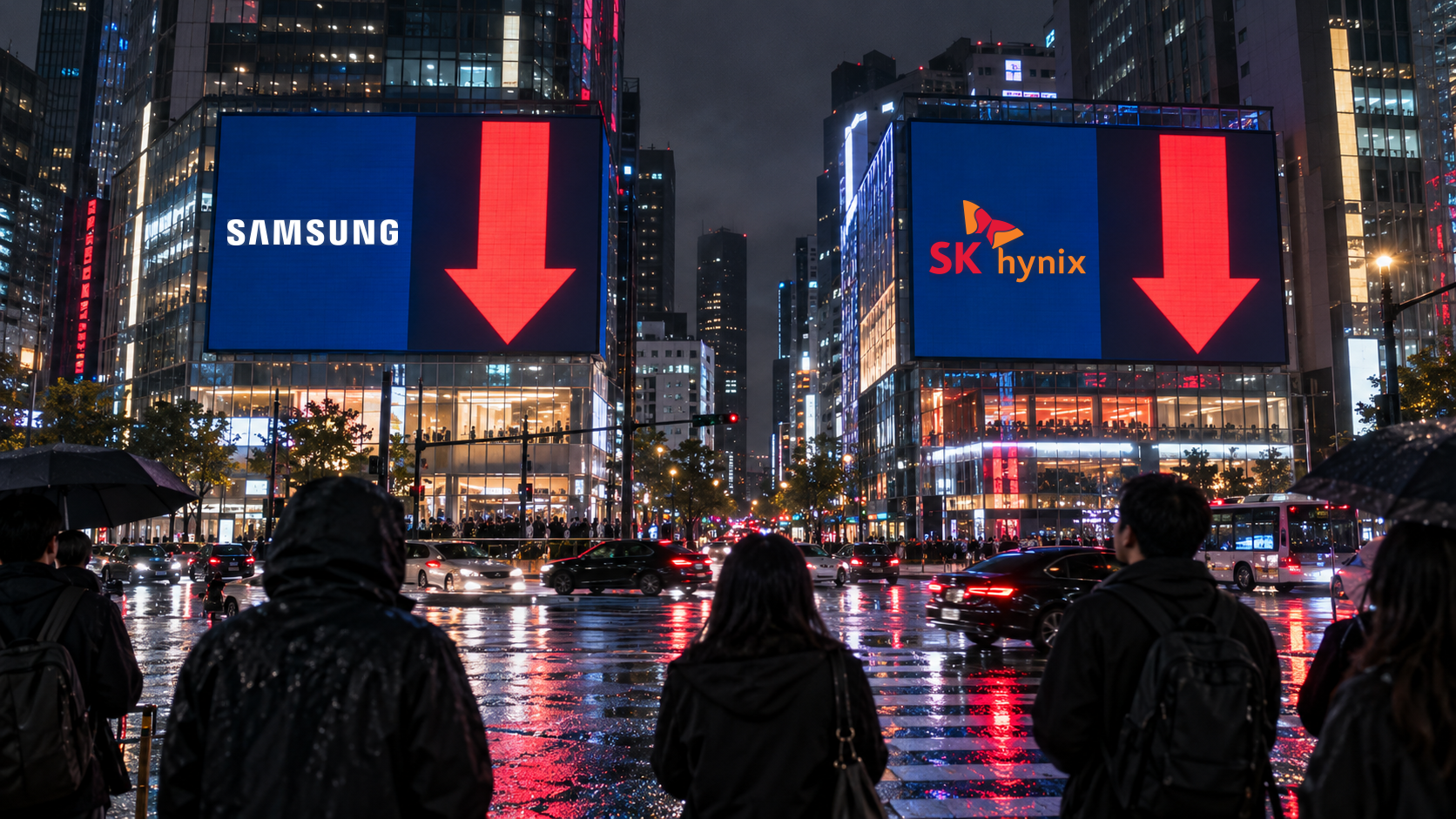
Table of Contents
- 🧭 Before You Open the Terminal
- Key Indicators Dashboard
- 🗿 The Pretore Today
- 🧭 Compass of the Day
- 📐 Yield Curve
- 🏦 Banks: Large vs Regional
- Executive Summary
-
News in Detail
- 1. The chip rebound lasts one night: Nasdaq +1.05% on Wednesday, Asia and futures lower on Thursday
- 2. Meta: revenue beats estimates, a de facto split and a $9.9 billion legal charge
- 3. Tesla: earnings beat, capital spending cut and Optimus pushed to the end of 2027
- 4. Lam Research, Texas Instruments, IBM and Super Micro: who sells the tools of AI
- 5. Oil: new Houthi attacks, U.S. diplomats leaving and plans to strike Iran after the vote
- 6. SpaceX surges, Anthropic heads for a public prospectus
- 7. Mortgage applications fall even as rates drop, the Fed stays on track for a December hike
- 📰 In Brief
- Aggregated Sentiment Table
- Fear and Loathing on Wall Street™
- Cross-Cutting Synthesis
- Strategic Alerts
- Disclaimer & Maxim
🧭 Before You Open the Terminal
📈 U.S. equities: tech leads again, for a day
🆕 The Nasdaq rose 1.05% to 26,702.86, the S&P 500 0.58% to 7,757.17, the Dow 0.69%; semiconductors gained 1.97%. Tech was the best sector (+1.67%), health care lost 0.49%. The Pretore flips semiconductors back to a long signature.
🏢 Overnight earnings: Meta up, Tesla and Lam down
Meta beat revenue estimates ($64.6 billion, +26%) and announced a new class of non-voting shares that amounts to a two-for-one split; after the close it rose between 1.5% and 3%. Tesla cut 2026 capital spending to about $20 billion and fell between 2% and 4%. Lam Research lost about 7% on its quarterly guidance.
🌏 Asia: chip selling is back
The Kospi closed down 3.52%, the Nikkei 2.65%; SK hynix lost 5.49%, Samsung 4.03%. This morning Nasdaq futures are down 1.6%, S&P 500 futures 0.9%.
🛢️ Oil and Iran
New Houthi attacks in Saudi Arabia, part of the U.S. diplomatic staff heading home and, according to the New York Times, plans to strike Iran after the midterm elections: this morning Brent stands at $111.30 (+2.28%).
🏛️ Rates and housing
The 10-year holds at 5.13%, the 2-year rises to 4.81%. Mortgage applications fall 5.3% even as the 30-year rate drops to 7.41%. The market puts the odds of a December Fed hike at about 88%.
Verdict
🔴 High priority — Fantiborsa’s take: on Wednesday Wall Street bought back the chips it had left on the shelf on Tuesday; on Thursday morning Seoul and Tokyo put them back in the window at a discount. Between the two time zones sits Tesla, promising the biggest product on Earth while cutting its spending. The Nasdaq-100 closed a tenth of a percentage point above the level that voids its signature: today we find out whether the rebound was a comeback or a misunderstanding.
Trust me: today it’s worth finding five minutes to read the whole thing ☕
Key Indicators Dashboard
| Indicator | Value | Change | Reading | Signal |
|---|---|---|---|---|
| S&P 500 | 7,757.17 | +0.58% | RSI 53.6; above SMA50 (7,704.85) and SMA200 (7,284.21); Pretore active long | |
| Nasdaq (COMPQ) | 26,702.86 | +1.05% | RSI 48.6; back above SMA50 (26,627.56); Pretore active long | |
| Nasdaq-100 (NDX) | 29,822.52 | +1.13% | RSI 46.2; just below SMA50 (29,867.45); Pretore active long, 0.10% from invalidation | |
| Philadelphia Semi (SOX) | 11,505.56 | +1.97% | RSI 40.2; below SMA50 (12,016.70); Pretore back to active long | |
| Dow Jones | 52,856.09 | +0.69% | RSI 62.6; above SMA50 (52,370.57); Pretore active long | |
| Russell 2000 ETF (IWM) | 276.48 | +0.25% | RSI 44.2; below SMA50 (287.49) and SMA200 (278.03) | |
| VIX | 16.68 | −3.64% | Above SMA50 (15.74), below SMA200 (18.17); Pretore active short on its reference ETF | |
| US 2Y | 4.81% | +2 bp | The short end rises for a third straight session | |
| US 10Y | 5.13% | +1 bp | 10-year nearly flat | |
| 2s10s spread | 32 bp | −1 bp | Positive, nearly unchanged | |
| DXY | 101.78 | +0.05% | RSI 50.1; above SMA50 (100.50) and SMA200 (99.54) | |
| Gold | 4,150.00 | +0.18% | December contract; below SMA50 (4,351.10) and SMA200 (4,535.42); Pretore active short; 4,109.90 this morning | |
| Silver | 57.42 | −0.49% | Below SMA50 (63.30) and SMA200 (71.77); Pretore long, attenuated; 56.26 this morning | |
| WTI | 97.15 | −0.69% | December contract; 99.25 this morning | |
| Brent | 108.82 | +0.03% | December contract; above $110 during the session; 111.30 this morning | |
| EUR/USD | 1.12 | +0.10% | Below SMA50 (1.15) and SMA200 (1.16); 1.1244 this morning | |
| BTC | 82,486.90 | −0.55% | Above SMA50 (81,671.56) and SMA200 (72,726.24); closes below the Pretore invalidation (82,689.98) | |
| ETH | 2,429.20 | −0.72% | Below SMA50 (2,550.17), above SMA200 (2,153.07); Pretore active long | |
| Crypto Fear & Greed | n/a | — | Current value not available in session |
Equity indices, VIX, dollar, gold, silver, euro and crypto at the close on Wednesday, October 21, 2026 (StockCharts/Yahoo Finance; gold on the December contract). Crude: Wednesday settlements of the December contracts (Reuters). Treasury yields: official U.S. Treasury data for October 21 compared with October 20. This morning’s values: Yahoo Finance, 9 a.m. Italian time.
The Pretore Today
U.S. index signatures. The S&P 500, the Dow Jones, the Nasdaq-100 and the Composite stay in active long. The Nasdaq-100 and the Composite are no longer attenuated: the Composite closes right on the buyers' balance point of recent weeks, the Nasdaq-100 just below it, 0.35% away. Semiconductors return to active long after a single session short. The VIX, read through its reference ETF, stays in active short: volatility keeps easing.
Polarity flip: yes. Semiconductors move from `short_attiva` as of October 20 to `long_attiva`; copper from `long_attiva` as of October 20 to `short_attiva`.
The awkward signatures. The first is semiconductors. In three sessions the signature has gone from long to short and back to long, and on Wednesday the index closed at 11,505.56, below the 11,629.35 that yesterday's RADAR flagged as the invalidation level of the short signature: the Pretore records buyers coming back, but price hasn't cleared that level yet. Then, overnight, Asia sold those very chips. The second is the Nasdaq-100 and the Dow: both closed just 0.10% above the level that would void their long signature, and this morning Nasdaq futures are down 1.6%. The third is gold, which stays in a short signature as it was yesterday: with Brent above $111 and new plans to strike Iran, it slips below $4,110 this morning. The safe haven, once again, isn't doing its job.
Macro convergence. The dollar and the euro, each read through its ETF, both stay in active long; on rates the Pretore works off an ETF holding 7–10-year Treasuries, also in active long: bonds are holding up and the 10-year stays just above 5.1%. $WTIC and $BRENT stay in active long, but their data are stuck at Tuesday's close.
$SPX operating levels: close 7,757.17 · AVWAP Consensus 7,723.74 (+0.43%) · closing invalidation 7,623.15 (−1.73%). The AVWAP Consensus is the volume-weighted average the Pretore uses as a structural price anchor. The invalidation is the level below which, on a closing basis, the long signature lapses: it is not a stop-loss order.
The overall read. The Pretore records a day when the pieces come back together: every index signature is back to long and tech moves back toward the buyers' balance point. But the recovery is fragile. The Nasdaq-100 and the Dow close a tenth of a percentage point from their invalidation, semiconductors flip long without clearing yesterday's level, and the Asian night runs the other way. The first word says the market bought tech back; today's session will say whether it keeps it.
Snapshot as of October 22, 2026 (reference close October 21; crude and crypto October 20).
Compass of the Day
FINBEAR Compass™ · $SPX · Oct 21, 2026
  VERDICT           CONTESTED        — recent momentum doesn't take a side
  OPERATING REGIME  Moderate bull
  LINEARITY         Non-linear trends
  COHERENCE         FULL
  RELIABILITY       SUSPENDED
  POSITION          in band          — below the underlying trend
  UNDERLYING TREND  Persistent bull  — solid
The Compass shows the same picture as yesterday: a bullish operating regime inside a solid underlying trend, with flat recent momentum that neither endorses nor challenges the regime. The signal stays scattered and the trend can't be read with confidence: the Compass argues for waiting. On the Nasdaq-100 and the Composite the regime stays bullish, but the short- and medium-term horizons pull in opposite directions. On semiconductors the Compass still records a strong bear operating regime, with price below the underlying trend: Wednesday's rebound didn't change the picture. On the Dow, by contrast, recent momentum confirms the regime. The semiconductor signature flips long while the compass still sees them in a bearish regime: the two readings measure different things, and for now they don't agree.
Yield Curve
U.S. Treasury Curve · Oct 21, 2026
  SHAPE       flat
  MOVEMENT    unchanged
  MACRO       normal
For the economy: the curve stays flat and barely moves: yields change little and the gap between the short and long ends stays almost the same. The market is waiting for the October 28 Fed meeting, with a December hike nearly priced in and no expectation of cuts.
For banks: a flat, stationary curve doesn't widen net interest margin. On Wednesday the sector rose anyway, led by the large banks, as the next box shows.
Banks: Large vs Regional
XLF · KBWB · KRE — sector under watch
- KBWB (large banks) — closes at 88.08 (+1.15%), inside the 87.74–88.43 zone, with resistance at 88.98: ordinary price state.
- KRE (regionals) — flat at 70.62 (0.00%), at the top of the 69.68–70.64 zone, with resistance at 71.33: ordinary price state, still below resistance.
- XLF (sector) — at 56.04 (+0.57%), inside the 55.89–56.18 zone, with support between 55.45 and 55.65.
On Wednesday the roles reversed from Tuesday, when yesterday's RADAR had the regionals in front: the large banks led, while the regionals stalled. That fits a session in which money went back to the big groups and left small caps behind. The regionals sit just below resistance without breaking it for a second straight session.
Sector under watch — not consolidated. A reading, not a signal.
Executive Summary
🎬 The day in one line
On Wednesday the Nasdaq rose 1.05% and semiconductors 1.97%; on Thursday morning Asia sold the chips again and Nasdaq futures fell 1.6%: the tech rebound held for one session.
📈 The day: tech takes the lead back
- SpaceX and Super Micro. SpaceX rose 7.79% after its first profit as a listed company; Super Micro 9.55% after raising its preliminary estimates for the quarter ended in September to $18.5–19.5 billion in revenue.
- The market flips. Tech gained 1.67%, health care lost 0.49%, and the equal-weight S&P 500 ETF rose just 0.36%: on Tuesday it had risen four times as much as the index.
🏢 The night: earnings split the market
🆕 Meta beat revenue estimates and announced a new class of non-voting shares, equivalent to a two-for-one split; earnings per share absorb a $9.89 billion legal charge. Tesla beat on adjusted earnings, but cut 2026 capital spending to about $20 billion from the previously indicated level of more than $25 billion. Lam Research beat estimates, but guided to slower growth and lost about 7%. CFO Doug Bettinger blamed the slowdown partly on supply constraints:
“I would mention that this revenue guide would have been a bit higher if not for some near-term supply chain constraints that we are actively managing.”
🌏 The wake-up: Asia selling, oil rising
The Kospi lost 3.52% and the Nikkei 2.65%, with SK hynix, Samsung and Kioxia sharply lower. In the Gulf, new Houthi attacks in Saudi Arabia and plans for new strikes on Iran after November 3: Brent rises to $111.30.
🏛️ Rates and housing
Mortgage applications fall 5.3% even as the 30-year rate comes down; the market puts the odds of a December Fed hike at about 88%.
⏳ The bottom line
The rotation out of tech seen on October 16 and 20 pauses for a day, without triggering the levels that would disprove it. The night calls the rebound back into question: the market still believes in AI spending, but it’s starting to doubt the companies that sell the machinery behind it.
News in Detail
1. The chip rebound lasts one night: Nasdaq +1.05% on Wednesday, Asia and futures lower on Thursday
What happened
✅ On Wednesday, October 21, the Nasdaq Composite rose 1.05% to 26,702.86, the S&P 500 0.58% to 7,757.17 and the Dow 0.69% to 52,856.09; the Russell 2000 gained 0.27% and the semiconductor index 1.97% to 11,505.56 (CappNotes, HDFC Sky, StockCharts). ✅ Tech was the best sector (+1.67%); health care (−0.49%), consumer staples (−0.73%), real estate (−0.76%) and communication services (−1.11%) fell. The equal-weight S&P 500 ETF (RSP) rose 0.36% (CappNotes). ✅ Among the most active names Nvidia gained 2.54%, Super Micro 9.55% and SpaceX 7.79% (Yahoo Finance).
✅ On Thursday morning the Kospi closed down 3.52% at 5,533.77 and the Nikkei 2.65% at 62,907.84, below 63,000 for the first time since September 14; SK hynix lost 5.49%, Samsung Electronics 4.03%, Kioxia 6.77% and SoftBank 6.86% (TradingKey). ✅ Hong Kong also fell hard, with Lenovo and Hua Hong Semiconductor down about 7%; chips were sold across the region after Tesla’s spending cut, Lam Research’s after-hours drop and doubts over Meta’s AI spending (Newsquawk). ✅ At 9 a.m. Italian time Nasdaq futures were down 1.60%, S&P 500 futures 0.87% and Dow futures 0.48% (Yahoo Finance).
Yesterday’s RADAR set the invalidation of its rotation thesis at a semiconductor close above 11,629.35 or a Dow close below 51,584.55 by Friday, October 23. On Wednesday the SOX closed at 11,505.56 and the Dow at 52,856.09: the trigger didn’t fire, but the day went the opposite way from the thesis. The October 20 invalidation also stands: the S&P 500 is at 7,757.17, above 7,623.15, and the Nasdaq-100 at 29,822.52, above 29,190.35.
What sources say
“pushes back on some of the investor worries” — Angelo Kourkafas, Edward Jones, on SpaceX’s results (Reuters)
“a reaffirmation that the artificial intelligence trade is still intact” — Marc Dizard, Huntington Bank (Reuters)
FINBEAR Take: the market buys by day and has second thoughts by night
On Wednesday money came back to tech as fast as it had left on Tuesday. The two versions of the S&P 500 measure it: on Tuesday the equal-weight ETF rose four times as much as the index; on Wednesday it rose just 0.36%, against 0.58% for the index dominated by the biggest companies. The reason is plain: SpaceX and Super Micro showed that AI spending turns into real revenue, and strategists read it as confirmation that the trade holds.
The night brought another reading, and that’s the one that matters today. In Seoul and Tokyo it wasn’t the companies that use AI that got sold, but the ones that build the machinery and the memory to run it: SK hynix, Samsung, Kioxia. The explanation lies in the U.S. earnings reports released after the close: Tesla is spending less than planned, and Lam Research sees growth slowing. The fact is positive (AI spending continues), the reaction is negative (the toolmakers fear the pace will slow). When the two diverge, the reaction says more.
Cui prodest? Those who used Wednesday’s rebound to lighten up on semiconductors ahead of the evening’s earnings. The losers are those who read it as the end of the correction: the SOX long signature is back, but price hasn’t cleared yesterday’s level.
For investors
Instruments involved:
- Stocks: $NVDA, $SMCI, $LRCX, $MU, $SMH, $SOXX, $QQQ, $EWY, $EWJ, $SMH
Opportunities:
AI spending is confirmed by SpaceX’s and Super Micro’s results; the big tech groups lead the index again
Risks:
Nasdaq-100 0.10% from the invalidation of its long signature, futures down 1.6%: the rebound can be wiped out in a session
What to avoid:
Reading the semiconductor long signature as a turning point: the signature changed twice in three sessions, and price is still below yesterday’s level
Bottom line:
America buys the chips back, Asia sells them again: the companies selling the machinery for AI are starting to pay for the slowdown before the ones buying it.
Impact: (3/5) — Tech rebound undone by the Asian night, Nasdaq futures −1.6%
2. Meta: revenue beats estimates, a de facto split and a $9.9 billion legal charge
What happened
✅ In the third quarter Meta reported revenue of $64.601 billion, up 26% from a year earlier, above the consensus of about 63.3 billion (Meta, press release; Newsquawk). ✅ Operating margin fell to 20%, from 40% a year earlier, on a $9.89 billion legal charge tied to the lawsuits over teenagers’ mental health; net income rose 264% to 9.86 billion thanks to a lower tax rate, and diluted earnings per share were $3.83 (Meta, press release; TradingKey). ✅ Excluding the legal charge, earnings per share would have been $7.40 (Meta, press release). ✅ Capital spending for the quarter came to $34.91 billion; free cash flow was negative $2.12 billion (Meta, press release; TradingKey). ✅ For the fourth quarter the company expects revenue of $73 billion to $76 billion; for 2026 it narrows its capital spending range to 135–145 billion, from 130–145, and raises its expense range to 175–179 billion to include the legal charge (Meta, press release).
✅ The board approved a new class of listed non-voting common shares, Class C, with an expected effective date of January 19, 2027, and a special stock dividend: one Class C share for every Class A and Class B share. Meta expects the price of Class A shares to reflect what is in effect a two-for-one split (Meta, press release). ✅ The stock, which had closed at $697.52 (+0.47%), rose between 1.5% and 3% after hours, depending on the source and the time (Yahoo Finance, Newsquawk, CappNotes). Yesterday’s RADAR was waiting for Meta’s first word on 2027 capital spending: the company doesn’t put a number on it yet, but says it will keep investing heavily in AI.
What sources say
“Our investments are paying off, the core business is strong, and we’re seeing velocity across the board.” — Mark Zuckerberg, Meta (press release)
“We hit major milestones this quarter toward delivering personal superintelligence for everyone” — Mark Zuckerberg, Meta (press release)
FINBEAR Take: advertising pays for AI, Class C pays for the rest
The quarter confirms that Meta’s advertising machine is running hard: revenue +26%, average ad price +14%, fourth-quarter guidance in line with or above expectations. It answers the question the market had been asking for five down sessions: advertising remains the engine feeding the AI race. But in the quarter the cash from operations no longer covers the capital spending: $35 billion spent in three months, and free cash flow already negative.
That’s where the new Class C stops being a technical detail. Listed shares without voting rights are a tool for raising capital without diluting Zuckerberg’s control, and in our view they’re the lever to fund the AI race. The market rewarded the numbers; how much 2027 will cost, Zuckerberg didn’t say.
Cui prodest? Zuckerberg, who gives himself a currency to fund growth without giving up control, and the data center infrastructure suppliers, who see the spending confirmed. The losers are those hoping for a spending slowdown to give free cash flow some air.
For investors
Instruments involved:
- Stocks: $META, $GOOGL, $NVDA, $XLC, $QQQ, $META
Opportunities:
Ad revenue up 26% and solid fourth-quarter guidance: operations generate plenty of cash, even if in the quarter capital spending outran it
Risks:
Free cash flow already negative; 2027 capital spending not yet quantified; a legal charge that could recur
What to avoid:
Reading earnings per share of $3.83 as a collapse in profits: it carries a one-off legal charge
Bottom line:
Advertising pays for artificial intelligence; for everything else, Meta is getting ready to print a new currency without a vote.
Impact: (2/5) — Revenue and guidance above expectations, negative cash flow, positive but contained reaction
3. Tesla: earnings beat, capital spending cut and Optimus pushed to the end of 2027
What happened
✅ In the third quarter Tesla reported revenue of $28.05 billion, essentially flat from a year earlier, and adjusted earnings of $0.48 a share, against 0.45 expected (Electrek, Investing.com transcript). ✅ Gross margin rose to 19.6%, but operating income fell 56% to $718 million; free cash flow was 1.53 billion (Electrek). ✅ Deliveries were 486,532, down 2.1%; energy storage systems installed in the quarter reached 13.7 GWh, below expectations (Electrek). ✅ Capital spending for the quarter rose to $4.73 billion; for full-year 2026 the company cuts it to about $20 billion from the previously indicated level of more than $25 billion (Investing.com transcript, Newsquawk). ✅ Tesla has secured credit lines of up to 30 billion, but doesn’t plan to draw on them this year (Investing.com transcript).
✅ On the Optimus humanoid robot, Musk points to first customer deliveries around the end of 2027 and at least a year to reach a rate of 20,000 units a week (Investing.com transcript). ✅ On a possible merger with SpaceX, Musk adds nothing to what he said the day before (Investing.com transcript). ✅ The stock, which had closed at $386.47 (+3.41%), fell between 2.2% and 4.3% after hours, depending on the source and the time (Investing.com transcript, Newsquawk). Yesterday’s RADAR flagged margins and cash as the expected weak spots: cash surprises to the upside, but the spending cut changes the reading.
What sources say
“I remain convinced that Optimus will be the biggest product on Earth” — Elon Musk, Tesla (earnings call, Investing.com transcript)
“We do not plan to make any draws under any of the new facilities in this calendar year.” — Tesla’s CFO (earnings call, Investing.com transcript)
FINBEAR Take: the biggest product on Earth, with five billion less
The numbers are better than expected on the fronts that had caused concern: recovering margins, positive free cash flow and earnings above estimates. But the market is looking elsewhere. Tesla takes this year’s capital spending from more than 25 to about 20 billion and pushes back Optimus: the biggest product on Earth will reach customers at the end of 2027, and to get to 20,000 units a week Musk estimates at least a year, maybe a bit more.
The cut can be read two ways, and Asia chose the second. For Tesla, it’s financial discipline: less spending, positive free cash flow and no planned use of the new credit lines this year. For those selling it chips, machinery and components it’s one order fewer, which is why Asian suppliers were sold overnight. On its own a five-billion cut is small change; as a signal it weighs a lot, in a market that fears exactly a slowdown in orders.
Cui prodest? Shareholders who wanted discipline on cash: Tesla is generating cash again and doesn’t plan to tap the new credit lines this year. The losers are the suppliers of chips, robotics and equipment, who see orders and timelines slip.
For investors
Instruments involved:
- Stocks: $TSLA, $SPCX, $NVDA, $XLY, $QQQ, $BOTZ, $TSLA
Opportunities:
Positive free cash flow and recovering margins: no planned use of the new credit lines in 2026
Risks:
Capital spending cut and Optimus pushed back: the promised growth moves further away, with revenue flat and deliveries down
What to avoid:
Buying the Optimus promise as if it were revenue: first deliveries are expected around the end of 2027
Bottom line:
Musk sees the biggest product on Earth; the suppliers see five billion in lost orders.
Impact: (2/5) — Earnings above expectations, but capital spending cut and a negative reaction that spilled over to Asian suppliers
4. Lam Research, Texas Instruments, IBM and Super Micro: who sells the tools of AI
What happened
✅ Lam Research reported revenue of $8.22 billion (+54%) and adjusted earnings of $2.20 a share, above expectations; for the current quarter it guides to revenue of 8.6 billion (plus or minus 400 million) and earnings of $2.33 a share, a cent above consensus (TIKR, Newsquawk). The guidance implies sequential growth below 5%, after three quarters of acceleration; the company cites lower revenue from Chinese customers, who account for 35% of sales, and a component shortage. ✅ The stock lost about 7% after hours (TIKR). 📊 For 2027 Lam sees industry spending on chipmaking equipment above 200 billion, about 30% more than this year (TIKR).
✅ Texas Instruments reported revenue of $6.055 billion (+28%) and earnings of $2.62 a share; for the fourth quarter it guides to revenue of 5.8 to 6.3 billion, above the 5.75 consensus. The stock barely moved after the close, as higher capacity spending and constraints on equipment supply offset the upbeat guidance (TI, press release; Newsquawk). ✅ IBM reported revenue of $17.1 billion (+5%), with software up 8% and consulting flat; adjusted earnings were $2.95 a share and the company confirmed 2026 revenue growth of 4% to 5% at constant currency (IBM, 8-K; Newsquawk). The stock had closed the session up 3.94%; reports on after-hours trading conflict across sources.
✅ On Tuesday evening Super Micro raised its preliminary estimates for the quarter ended in September to $18.5–19.5 billion in revenue, from the 14.5–15.5 previously expected, and gross margin to 12–12.5%, citing demand for AI platforms; on Wednesday the stock rose 9.55% (Super Micro, press release; CappNotes). Yesterday’s RADAR listed Lam, Texas Instruments and IBM among the evening’s reports: all three beat estimates, none fully convinces.
What sources say
“I would mention that this revenue guide would have been a bit higher if not for some near-term supply chain constraints that we are actively managing.” — Doug Bettinger, CFO of Lam Research (earnings call)
“Revenue increased 11% sequentially and 28% from the same quarter a year ago” — Haviv Ilan, Texas Instruments (press release)
FINBEAR Take: beating estimates isn’t enough anymore, you have to accelerate
The four reports tell the same story from different angles. Super Micro, which assembles the servers, raises its estimates by more than a quarter and soars. Lam, which sells the machines that make the chips, beats estimates but slows, and loses 7%. Texas Instruments grows 28%, but has to spend more on capacity. IBM sells AI software to businesses, but consulting stays flat.
The market doesn’t punish those who disappoint: it punishes those who slow down. Lam beat every estimate and guided to a quarter above consensus, yet lost more than $20 billion in market value within hours, because growth isn’t accelerating anymore. And when the company making the chipmaking machines points to China and a component shortage as brakes, it’s the memory suppliers that get sold in Asia.
Cui prodest? Those who assemble AI systems and sell directly to the big groups, like Super Micro, which captures that spending without waiting for the equipment cycle. The losers are the upstream tool suppliers, whose expected revenue growth is losing momentum amid China-related headwinds and supply constraints.
For investors
Instruments involved:
- Stocks: $LRCX, $AMAT, $KLAC, $TXN, $IBM, $SMCI, $SMH, $SOXX, $LRCX
Opportunities:
Industry spending on chipmaking equipment is seen growing about 30% in 2027; Super Micro shows that server demand stays strong
Risks:
Slowing sequential growth in equipment revenue, with China and component shortages cited as brakes
What to avoid:
Reading a quarter above estimates as a guarantee the stock will rise: Lam beat consensus and lost 7%
Bottom line:
In the chip cycle, growing isn’t enough: you have to grow faster than the quarter before.
Impact: (2/5) — Results above estimates, but slowing equipment growth and a negative reaction upstream
5. Oil: new Houthi attacks, U.S. diplomats leaving and plans to strike Iran after the vote
What happened
✅ On Wednesday December Brent settled at $108.82 (+0.03%), after topping $110 during the session; December WTI settled at 97.15 (−0.69%) (Reuters via FinanceFeeds, CappNotes). ✅ In the week to October 16 U.S. crude inventories fell by 3.06 million barrels, against an expected draw of 820,000; distillate stocks rose by 1.68 million (EIA, via Reuters). ✅ On Wednesday a drone aimed at a facility in Saudi Arabia’s Shaybah field was intercepted, but the debris killed two people; a few hours later an attack on Dammam airport left one dead and eight injured. The Saudi Energy Ministry said operations at the facilities were not affected (Reuters via FinanceFeeds, Arab News).
✅ The United States ordered part of its diplomatic staff and their families to leave Saudi Arabia, and is preparing departures from other posts in the region (Reuters, Newsquawk). ✅ According to the New York Times, U.S. and Israeli forces have drawn up plans for new strikes on Iran’s nuclear facilities, energy infrastructure and missile arsenals after the November 3 elections; Trump has said the United States won’t strike before the vote (Benzinga, Newsquawk). ✅ This morning at 9 a.m. Italian time Brent stood at $111.30 (+2.28%), WTI at 99.25 (+2.16%) (Yahoo Finance).
Yesterday’s RADAR described a risk premium that walks out the front door and climbs back in through the window: this morning it came back in harder, and this time the threat also comes from Washington.
What sources say
“Oil prices remain well bid, with ICE Brent back above $110 per barrel this morning” — ING (Reuters, via Arab News)
“We will not be attacking Iran at any time prior to the midterm elections to be held in the United States on November 3rd.” — Donald Trump, Truth Social, October 8 (Times of Israel)
FINBEAR Take: the risk premium now has a calendar
Until now oil swung between talk of negotiations and talk of war, with Houthi attacks as the main driver. The New York Times report adds something different: a timeline. If the plans exist and kick in after November 3, the risk premium is no longer insurance against an accident, but against an event with a rough date. That’s a difference the market prices in advance, and you can see it in this morning’s Brent.
Pulling diplomatic staff out of Saudi Arabia points the same way: Washington is treating Gulf security as a concrete risk, not a theoretical one. And as crude rises, gold falls: even with war on the calendar, the market isn’t using the classic safe haven.
Cui prodest? U.S. crude producers, far from the Gulf and paid at Gulf prices. The ones paying are airlines, trucking and the Fed, which sees oil as one more reason not to stop.
For investors
Instruments involved:
- Stocks: $XOM, $CVX, $COP, $XLE, $USO, $BNO, $USO
Opportunities:
Producers benefit from high prices; the Pretore stays long on WTI and Brent
Risks:
Strike plans that can change with diplomacy; a deal can strip the premium out in a single session
What to avoid:
Buying Brent at the morning’s highs: the premium rises and falls with the headlines
Bottom line:
War has found a slot on the calendar, and oil is already booking it.
Impact: (3/5) — Brent above $111, threat of strikes on Iran with a time horizon
6. SpaceX surges, Anthropic heads for a public prospectus
What happened
✅ On Wednesday SpaceX closed at $159.31 (+7.79%), its best session in two months, after its first profit as a listed company: 4.4 billion on revenue up 161% (Yahoo Finance, CappNotes). ✅ Tesla rose 3.41% after Musk’s comments on a possible merger between the two companies (Reuters, Yahoo Finance). ✅ AT&T lost 6.45% despite beating estimates and raising guidance, on fears that SpaceX could become a stronger competitor in mobile (CappNotes, Reuters).
✅ According to three people familiar with the plans, Anthropic could publicly file its IPO prospectus as soon as Friday, October 23, a necessary step for a possible listing in November (Yahoo Finance). 📊 According to Reuters, Wall Street expects a raise of up to $100 billion, at a valuation of around $2 trillion (Reuters, via Yahoo Finance). ✅ In the first half of 2026 the company posted revenue of 16.3 billion and a net loss of more than 80 billion (WSJ, via Yahoo Finance). Yesterday’s RADAR covered the draft prospectus reported by the Wall Street Journal, with $450 billion in computing commitments: on Friday those numbers could become public.
What sources say
“set to publicly file its S-1 investor prospectus as soon as Friday” — Yahoo Finance, citing three people familiar with the plans
“The move would mark a crucial next step for what could be the biggest IPO in history.” — Yahoo Finance
FINBEAR Take: the market opens the door to giant listings
SpaceX has been listed since June and just booked its first profit; Anthropic is preparing to list with what could be the largest offering ever. It’s the same chain seen from both ends: SpaceX makes money selling computing capacity, Anthropic is among the big buyers of computing capacity. On Wednesday, the market rewarded the company bringing in the money.
A $100 billion listing, though, is also a call on capital. If the prospectus comes on Friday and the raise goes ahead in November, some of that money could come out of other tech stocks. For a sector down 1.6% in futures this morning, that’s no small matter.
Cui prodest? The banks that will run the deal and the cloud providers with contracts already signed with Anthropic. The loser is AT&T, which now faces a rival in SpaceX’s telecom business, a competitor putting up a giant’s numbers.
For investors
Instruments involved:
- Stocks: $SPCX, $TSLA, $T, $GOOGL, $AMZN, $ARKX, $QQQ, $SPCX
Opportunities:
Anthropic’s listing will make public the financial statements of one of the main buyers of computing capacity
Risks:
A raise of up to $100 billion can compete for capital with other tech stocks; timing depends on market conditions
What to avoid:
Taking Friday’s date as certain: it comes from anonymous sources
Bottom line:
SpaceX brings in the money, Anthropic asks for it: the market has to decide whether it has enough for both.
Impact: (2/5) — SpaceX sharply higher, but Anthropic’s listing will absorb capital
7. Mortgage applications fall even as rates drop, the Fed stays on track for a December hike
What happened
✅ In the week to October 16 mortgage applications fell 5.3%; purchase applications dropped 7%, 18% below a year earlier, and refinancing applications 2% (MBA, via The MortgagePoint). ✅ The average 30-year rate fell to 7.41% from 7.50%, the first decline in more than two months (MBA). ✅ Freddie Mac’s 30-year mortgage rate is released today; the previous reading was 7.40% (Freddie Mac).
✅ On Wednesday the 10-year closed at 5.13% (+1 basis point), the 2-year at 4.81% (+2) (U.S. Treasury). ✅ The fed funds rate stands in a 3.75%–4% range; the next meeting is October 27–28 (Federal Reserve). 📊 The market puts the odds of an October hike at around 15% (CME FedWatch, as reported by HDFC Sky) and of a December hike at around 88% (CME FedWatch, as reported by FXStreet). Yesterday’s RADAR put the December odds at around 90%: nearly unchanged. ✅ September consumer inflation was 3.7% year on year, core 2.6% (BLS).
What sources say
“Mortgage rates decreased for the first time in over two months, with the 30-year fixed rate dropping to 7.41 percent.” — Joel Kan, MBA (The MortgagePoint)
“Purchase applications fell 18 percent behind last year’s pace, as higher rates are pricing buyers out of the market.” — Joel Kan, MBA (The MortgagePoint)
FINBEAR Take: housing no longer responds to price
The mortgage data closes a very weak week for housing: starts down, pending home sales at a record low and now mortgage applications falling even as the rate comes down. That’s the clearest signal: households aren’t waiting for a few hundredths less, they’re waiting for a different level of rates altogether. With the 30-year above 7.4%, a drop of nine hundredths of a point changes nobody’s math.
The Fed, though, is looking elsewhere. Oil above $110, inflation at 3.7% and a short end of the curve rising for a third session say a December hike remains the base case. Housing is slowing, but not enough to stop the central bank.
Cui prodest? Those holding cash and short-dated Treasuries, with yields close to 5% and no hurry to move. The ones paying are homebuilders, real estate agents and the banks that live on mortgages.
For investors
Instruments involved:
- Stocks: $DHI, $LEN, $RKT, $XHB, $ITB, $SHY, $IEF
Opportunities:
Short-dated Treasuries yielding close to 5%; the Pretore stays long on the 7–10-year Treasury ETF
Risks:
A Fed hiking into an already stalled housing market can deepen the slowdown
What to avoid:
Reading the drop in mortgage rates as the start of a recovery in home sales: applications say the opposite
Bottom line:
Housing no longer reacts to decimals: it’s waiting for a Fed that, for now, is heading the other way.
Impact: (2/5) — Mortgage applications down, December hike nearly priced in
In Brief
- Netflix hits a one-year low. The stock lost 5.31% after weak fourth-quarter guidance and a downgrade to "hold" by Needham (CappNotes).
- eBay cuts 9% of its staff. According to Reuters, the company wants to simplify its organization; the stock rose 1.41% (Reuters, via AOL; Yahoo Finance).
- Ken Griffin: AI is "almost certainly" a bubble. The Citadel founder compares GPUs to airline seats (Decrypt).
- Earnings today. Before the open, Procter & Gamble, Comcast, Nokia, PG&E and Huntington Bancshares (Yahoo Finance); after the close, Bloom Energy, in focus after Musk's comments on power for data centers (Bloom Energy).
Aggregated Sentiment Table
| Cluster | Story | Sentiment | Score |
|---|---|---|---|
| 📈 Equity | The chip rebound lasts one night: Asia and futures lower | Negative / rebound undone | -8 |
| 📊 Earnings | Meta: revenue beats, de facto split, $9.9 billion legal charge | Positive / growth with negative cash flow | +5 |
| 📊 Earnings | Tesla: earnings beat, capital spending cut | Negative / a signal for suppliers | -5 |
| 🧱 AI Infrastructure | Lam, Texas Instruments, IBM, Super Micro | Negative / slowdown upstream | -4 |
| 🔋 Energy | Brent above $111, plans to strike Iran | Negative / risk premium | -10 |
| 🧠 AI & Tech | SpaceX surges, Anthropic heads for its prospectus | Neutral / contested capital | 0 |
| 💰 Central Banks | Mortgages down, December hike all but certain | Negative / higher rates for longer | -5 |
| Net Score | -27 |
Fear and Loathing on Wall Street™
Neutral — Index: 18

Registry comparison: the latest recorded reading is +7 (⚪ NEUTRAL, label FEAR UNDER COMPRESSION) on October 21, computed on Tuesday’s close. Since then the indices have risen further, volatility has fallen (VIX 16.68, −3.64%) and every index signature is back to long; this morning, though, Asia is selling chips and Brent is above $111.
Reading. The barometer moves in a market where the technical picture improves by day and cracks by night. The S&P 500 and the Dow stay above their averages and the Composite recovers its 50-day, while the Nasdaq-100 and semiconductors stay below; volatility is falling and the Pretore’s signatures are long. The tension, though, doesn’t ease: Nasdaq futures are down 1.6%, oil is rising on a threat of war with a time horizon, the Fed is still leaning toward a hike and housing no longer responds even to falling rates. It isn’t fear and it isn’t confidence: it’s a market that buys tech by day and regrets it by night.
Cross-Cutting Synthesis
The thread of the day is the gap between day and night. On Wednesday Wall Street buys tech back: SpaceX and Super Micro show that AI spending produces revenue, strategists call the trade intact, the Pretore puts every index signature back to long. On Thursday morning Asia sells the chips again and Nasdaq futures lose 1.6%. The facts are the same, the reaction is the opposite, and the difference lies in what arrived between the two sessions.
What arrived were the evening’s earnings, and they say something specific: AI spending continues, but the companies selling the tools behind it are starting to slow. Meta confirms capital spending of $135 billion to $145 billion and prepares a new class of shares to fund it. Tesla cuts its own to about 20 billion. Lam Research beats estimates but guides to slower growth, citing China and the component shortage, and loses 7%. The market doesn’t punish those who disappoint, it punishes those who slow down: that’s why the memory and equipment suppliers were sold in Seoul and Tokyo overnight.
In the background the cost of risk is rising. Oil is back above $111 after new attacks in Saudi Arabia and the New York Times report on plans to strike Iran after November 3. Housing no longer responds even to falling rates, and the Fed stays on course for a December hike. Gold falls even with war on the calendar: today the refuge is the short-dated Treasury.
Yesterday’s RADAR set the invalidation of its thesis at a semiconductor close above 11,629.35 or a Dow close below 51,584.55 by Friday, October 23. On Wednesday the SOX closed at 11,505.56 and the Dow at 52,856.09: the trigger didn’t fire, even though the session went against the rotation thesis. The Asian night takes the debate back to where we left it: the market hasn’t stopped believing in AI, but it keeps changing its mind about who will cash in on it.
Cui prodest? Those who assemble AI systems and sell directly to the big groups, and those who used Wednesday’s rebound to lighten up on semiconductors. The losers are those who bought the equipment suppliers on the SOX long signature, a few hours before the night that called it back into question.
📌 Thesis invalidation — This RADAR’s dominant thesis is: Wednesday’s tech rebound is fragile, because AI spending continues but the suppliers of equipment and memory are showing the first signs of slowing; oil and the Fed keep the cost of risk high. Holds because: Lam guides to sequential growth below 5% and loses about 7%, Tesla cuts capital spending to about 20 billion, the Kospi loses 3.52% with SK hynix and Samsung lower, Nasdaq futures fall 1.6%, Brent is above $111. Invalidated if: the semiconductor index closes above 11,629.35, clearing the level flagged yesterday, while the Nasdaq-100 stays above 29,792.15, the level that voids its long signature. By: the close on Friday, October 23. In that case: the FINBEAR reading shifts from a fragile rebound to tech coming back as the market’s engine.
Strategic Alerts
active long on the 29,822.52 close; closing invalidation at 29,792.15 (−0.10%), with futures down 1.6% this morning.
active long; closing invalidation at 52,802.05 (−0.10%).
active long on the 7,757.17 close; closing invalidation at 7,623.15 (−1.73%), the same level that would disprove the October 20 RADAR’s thesis.
active long; closing invalidation at 11,191.94 (−2.73%). A close above 11,629.35 would disprove this RADAR’s thesis, provided the Nasdaq-100 stays above 29,792.15.
active short on the Pretore’s reference price (4,150.00); closing invalidation at 4,191.61 (+1.00%).
the long signature, which yesterday’s RADAR gave a 0.30% cushion, still rests on Tuesday’s price; on Wednesday bitcoin closed at 82,486.90, below the 82,689.98 invalidation: to be checked at the Pretore’s next reading.
before the open, Procter & Gamble, Comcast, Nokia, PG&E and Huntington; after the close, Bloom Energy.
Friday, Anthropic’s possible public prospectus filing; October 28, the Fed decision; November 3, the midterm elections, with strikes on Iran reportedly planned for after the vote, according to the New York Times.
↑ Back to contents
Disclaimer & Maxim
This RADAR reports facts and how the market reacted to them; it doesn’t hand out orders. If you came here for investment advice, you’ve knocked on the wrong door, and the door isn’t to blame. Overnight Lam Research beat every estimate and lost more than $20 billion in market value within hours: if the market punishes even those who beat expectations, be wary of anyone who swears they know in advance how it will react.