RADAR DAILY™ FINBEAR — April 8, 2026
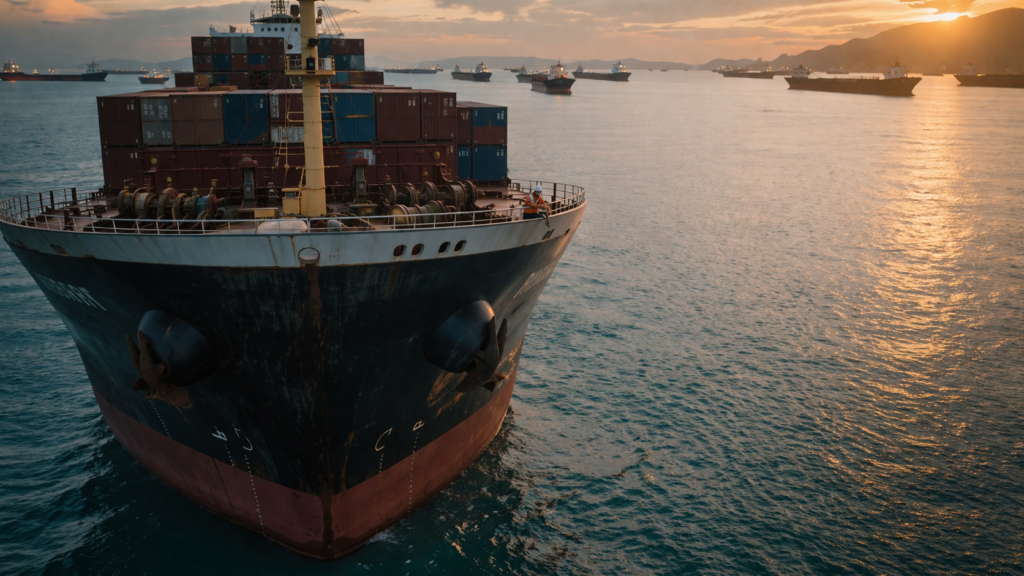
The US-Iran ceasefire reopens Hormuz and triggers oil’s worst crash since 1991. Global equity surges, Samsung posts a record $38B quarterly profit on AI chips, and SpaceX files the largest IPO in history. But the truce lasts only two weeks — and gold rising alongside equity says the market has removed the panic mask without putting on the confidence one.
📑 Index
- ⚡ In 20 Seconds
- 📌 Key Indicators Dashboard
- 🎯 Executive Summary
- 📊 Stories in Detail
- 🏛️◆ 1. US-Iran Ceasefire: Hormuz Reopens for Two Weeks, 800 Vessels Waiting
- ⛽◆ 2. Oil: Worst Crash Since 1991 — WTI -16.63%, Brent -14.43%
- 🌐◆ 3. Global Risk-On: Equity Surges, Dollar at One-Month Low, Gold and Copper Rally
- 📈◆ 4. Samsung Q1 Record: Operating Profit $38 Billion (+755% YoY) — AI Chips Crush Every Estimate
- 🏢◆ 5. SpaceX IPO: $1.75 Trillion and the Largest Offering in History
- 🌐◆ 6. Macro Traders: The Worst March in a Generation — Brevan Howard and Caxton on Their Knees
- 🧠◆ 7. OpenAI: The New Yorker Exposes Sam Altman’s “Pattern of Deception”
- 🌐◆ 8. Vietnam: FTSE Confirms Upgrade to Emerging Market — Entry in September 2026
- 📊 Sentiment Table
- 🎭 Fear & Loathing
- 🔗 Cross-Cutting Synthesis
- 🚨 Strategic Alerts
- 📜 Disclaimer & Fantiborsa Maxim™
⚡ In 20 Seconds
- US-Iran ceasefire — two-week truce, Hormuz reopens, 800+ vessels stranded
- Oil crashes — WTI -16.63%, Brent -14.43%, worst session since 1991
- Samsung Q1 record — operating profit 57.2 trillion won ($38B), +755% YoY
- SpaceX IPO filed — $1.75T valuation, $75B target raise, June listing
📌 Key Indicators Dashboard
| Indicator | Value | Change | Signal |
|---|---|---|---|
| S&P 500 (futures) | 6,834.50 | +2.67% | 🟢 |
| Nasdaq (futures) | 25,208.75 | +3.44% | 🟢 |
| Dow Jones (futures) | 47,986.00 | +2.51% | 🟢 |
| Russell 2000 (futures) | 2,655.00 | +3.71% | 🟢 |
| VIX | 20.33 | -21.12% | 🟢 |
| US 2Y | 3.86% | — | ⚪ |
| US 10Y | 4.343% | +0.18% (+0.8 bps) | ⚪ |
| 2s10s Spread | ~+48 bps | — | 🟢 |
| DXY | 98.84 | -0.98% | 🔴 |
| Gold (futures) | $4,820.40 | +2.90% | 🟢 |
| Silver (futures) | $77.00 | +6.96% | 🟢 |
| WTI (futures CL=F) | $94.17 | -16.63% | 🔴 |
| Brent (futures BZ=F) | $93.50 | -14.43% | 🔴 |
| EUR/USD | 1.1682 | +0.74% | 🟢 |
| BTC | $71,615 | +3.52% | 🟢 |
| ETH | $2,248.53 | +5.66% | 🟢 |
| Crypto Fear & Greed | 17 | +6 pts (from 11) | 🔴 |
Data: close 2026-04-08. Source: Yahoo Finance / StockCharts DATAPACK.
🎯 Executive Summary
The US-Iran ceasefire landed hours before Trump’s ultimatum expired, and the market responded with its most violently directional session since February 25 — but in reverse. Oil posted its most brutal single-day crash since 1991. Global equity surged, with the Nikkei at +5.39% and the DAX at +4.58%. The VIX cratered 21% below the 21 handle. The dollar hit a one-month low. Yet beneath the ceasefire euphoria, deeper currents are moving: the truce lasts just two weeks, Iran’s ten demands are maximalist to the point of fantasy, 800-plus vessels remain trapped in the Strait, and the Crypto Fear & Greed Index is still pinned at 17 — Extreme Fear. The thread running through the day is the compression of the geopolitical risk premium: anyone buying today is betting that two weeks of negotiations become a durable deal. Those who lost everything in March — Brevan Howard (-6.6%, worst month in 20 years) and Caxton Associates (-15%) — know this is a wager, not a certainty.
📊 Stories in Detail
🏛️◆1. US-Iran Ceasefire: Hormuz Reopens for Two Weeks, 800 Vessels Waiting
What happened
✅ The United States and Iran reached a two-week ceasefire, announced Tuesday evening just hours before Trump’s 8PM ET April 7 ultimatum deadline. Trump declared on Truth Social that he had agreed “to suspend the bombing and attack of Iran for a period of two weeks” in exchange for the reopening of the Strait of Hormuz. Iran’s Supreme National Security Council confirmed acceptance.
✅ Iran commits to allowing safe passage of maritime traffic through Hormuz for two weeks, provided vessels coordinate with Iranian armed forces and within “technical limitations.” Israel joined the truce, suspending its own strikes.
📊 Peace talks are scheduled for Friday in Islamabad, with Vice President Vance the likely head of the American delegation. Pakistan served as mediator.
🔸 Iran presented a 10-point proposal including: withdrawal of US combat forces from all regional bases, revocation of all sanctions, release of frozen Iranian assets, full payment of war damages, and a protocol for controlled passage through Hormuz.
✅ According to Bloomberg, more than 800 vessels are trapped in the Persian Gulf, with over 1,000 ships waiting on both sides — clustered around Dubai and Khor Fakkan, in the Gulf of Oman. Per the IMO, roughly 20,000 civilian seafarers are stranded aboard.
→ FINBEAR Context: in the April 7 RADAR we headlined “Hormuz Deadline Tonight, Qatar Ships in U-Turn: The Market Is Buying the Ceasefire, Everything Else Is Buying the War.” The binary trigger fired in the positive direction.
→ FINBEAR Context: in the April 2 RADAR we flagged “Trump Promises End of Iran War, but the Market Responds by Selling.” This time the market bought — because there is a signed agreement, not a promise.
What the sources say
“I have agreed to suspend the bombing and attack of Iran for a period of two weeks.”— Donald Trump, Truth Social, April 7, 2026
“Iran will allow safe passage of marine traffic through the Strait of Hormuz for two weeks if vessels coordinate with Iranian armed forces.”— Supreme National Security Council of Iran, via PBS
“Shipowners are rushing to understand the fine print of a ceasefire that could temporarily unblock the Strait of Hormuz and provide an exit window for more than 800 vessels trapped in the Persian Gulf.”— Bloomberg, April 8, 2026
FINBEAR Take: Two Weeks to Save the World — or to Prepare for the Next Round
The truce arrived like a lancet on an abscess: the relief is immediate, but the patient is still sick. Six weeks of war, thousands dead, a global energy crisis, and the deal boils down to this — a two-week pause with transit conditions Iran calls “technical” and Trump calls “COMPLETE, IMMEDIATE, and SAFE OPENING.” The semantic gap between the two versions is itself a signal: each side is selling its own audience what it needs to hear.
Iran’s ten demands are a masterclass in negotiating maximalism. Full US withdrawal, all sanctions lifted, war reparations paid in full — this is a wish list, not a realistic negotiating basis. But it serves Tehran domestically: proof that the truce is not a surrender. The real negotiation begins Friday in Islamabad, and the fact that Vance is leading the delegation — not Rubio, not a special envoy — says something about Trump’s political investment in this hand.
The hardest data point is the 800-plus ships and 20,000 seafarers stranded. Even if Hormuz reopens tomorrow, clearing the backlog will take weeks. Maritime insurance must be recalculated, routes redrawn, charter contracts renegotiated. The logistical cost of the crisis does not vanish with a tweet.
Cui prodest? Trump, who banks a “win” seven months before the midterms. Iran, which buys time and negotiating legitimacy. Traders who shorted oil in the final hour. Not the 20,000 seafarers still stranded, and not anyone with a variable-rate mortgage and a tank to fill.
For investors
Tickers: $XLE, $USO, $XOP, $BDRY, $EURN, $FRO, $STNG, $ITA
Opportunity:
Tankers and shipping could benefit from the backlog clearance — transport demand will spike once Hormuz effectively reopens. Watch spot freight rates.
Risk:
The truce is just two weeks. If the Islamabad talks collapse, the risk premium snaps back instantly. Iran’s ten demands make a durable deal unlikely near-term.
Avoid:
Aggressive directional bets on oil — volatility will be extreme over the next 14 days. Gap risk is at its peak.
Bottom line:
The truce compresses the geopolitical premium — it does not eliminate it. Buyers here are purchasing a 14-day option on negotiations, not a lasting peace.
Impact: 🟢🟢🟢🟢🟢 (5/5) — Ceasefire ends six weeks of war; Hormuz reopening is a geopolitical game changer
⛽◆2. Oil: Worst Crash Since 1991 — WTI -16.63%, Brent -14.43%
What happened
✅ WTI futures (CL=F) plunged to $94.17, down $18.78 (-16.63%). Brent futures (BZ=F) fell to $93.50, down $15.77 (-14.43%). It is the worst single-day decline in oil since the 1991 Gulf War.
✅ According to analysis reported by ad-hoc-news, the estimated geopolitical risk premium on crude compressed from approximately $14/barrel to $4–6/barrel.
✅ WTI spot (from the StockCharts April 7 chart, pre-ceasefire) had closed at $110.34 (-1.84%). Brent spot at $105.47 (-3.92%). The gap between Tuesday’s close and Wednesday morning futures measures the overnight shock.
→ FINBEAR Context: in the March 6 RADAR we reported the words of Qatar’s Energy Minister — “oil at $150 in three weeks if Hormuz stays blocked.” Hormuz did not stay blocked — but the counterfactual remains the yardstick.
What the sources say
“It’s the biggest one-day free fall in oil prices since the 1991 Gulf War.”— Axios, April 7, 2026
“The estimated oil risk premium compressed from about $14 per barrel to $4-$6.”— Ad-hoc-news/analysts, April 8, 2026
FINBEAR Take: The War Premium Melts Like Snow in the Sun — but There’s Still Snow on the Mountains
Sixteen percent in a single session. The last time oil moved like this, Saddam Hussein was pulling troops out of Kuwait. The parallel is not accidental: then as now, the market had accumulated weeks of war premium and dumped it in hours when the de-escalation headline hit.
But the parallel ends there. In 1991, the coalition had won militarily. Today we have a two-week pause with vague conditions and divergent interpretations. The risk premium compressed from $14 to $4–6/barrel, but those residual $4–6 are the market saying: “we don’t fully trust this.” And it’s right.
The real question is not where oil trades tomorrow — it is what happens to refineries, supply contracts, and the hedging positions built on WTI above $110. Anyone who bought protection at those levels is in margin-call territory. Those who shorted without cover are in paradise. And anyone running an airline is reckoning with the speed of history.
Cui prodest? Consumers, in the short run. Airlines. Net oil importers (India, Japan, Europe). Not the producers — and not anyone who built a portfolio around the wartime commodity super-cycle.
For investors
Tickers: $CL=F, $BZ=F, $USO, $XLE, $XOP, $OXY, $CVX, $XOM, $DAL, $LUV, $AAL
Opportunity:
Airlines and transport are direct beneficiaries of the fuel cost crash. Net-importer countries as well (Asian EM ETFs).
Risk:
Snap-back if talks collapse — the risk premium can return in hours. Energy stocks that rallied on the wartime super-cycle are vulnerable.
Avoid:
Building structural positions on the assumption that oil stays below $100. This is a truce, not peace.
Bottom line:
The premium compression is real but potentially temporary. The market has 14 days of visibility — no more.
Impact: 🔴🔴🔴🔴🔴 (5/5) — Worst crude crash since 1991, rewrites risk calculus for the entire energy complex
🌐◆3. Global Risk-On: Equity Surges, Dollar at One-Month Low, Gold and Copper Rally
What happened
✅ US futures in strong pre-market rally: S&P 500 +2.67% (6,834.50), Nasdaq +3.44% (25,208.75), Russell 2000 +3.71% (2,655.00).
✅ Asia celebrated: Nikkei +5.39% (56,308.42), KOSPI +6.8% (5,872.34), Hang Seng +3.09% (25,893.02), ASX 200 +2.55% (8,951.80), SSE Composite +2.69% (3,995.00).
✅ Europe followed: DAX +4.58% (23,970.77), EURO STOXX 50 +4.55% (5,889.55), CAC 40 +4.16% (8,237.47), FTSE 100 +2.59% (10,616.53).
✅ The dollar cratered: DXY at 98.84, a four-week low (-0.98%). EUR/USD at 1.1682 (+0.74%). USD/JPY at 158.42 (-0.69%).
✅ Gold at $4,820.40 (+2.90%), silver at $77.00 (+6.96%), copper +3.39% — three-week high.
✅ The VIX plunged 21.12% to 20.33 — below the psychological 21 threshold for the first time since the pre-war week.
What the sources say
“Dollar Hits Four-Week Low as Ceasefire Boosts Risk Appetite.”— Bloomberg, April 8, 2026
“Copper Hits Three-Week High as Iran Ceasefire Lifts Sentiment.”— Bloomberg, April 8, 2026
FINBEAR Take: The Euphoria Is Global, but a VIX at 20 Is Not a VIX at 12
The market reaction was unanimous, instantaneous, and global — the kind of synchronization you see only when the catalyst is unambiguous. But there is a hierarchy in the magnitude of moves that tells a subtler story. The KOSPI at +6.8% and the Nikkei at +5.39% are not just celebrating the truce — they are repricing the supply-chain risk that strangled Asian exports for six weeks. Europe at +4.5% is repricing energy costs. US futures at +2.5–3.5% are buying the reduction in macro uncertainty.
Gold rising alongside equity is the most telling data point. In a pure risk-on session, gold falls — capital exits safe havens and rotates back into equities. Instead, gold gained 2.90% while equity soared. Two explanations: dollar weakness (DXY -0.98% mechanically pushes gold higher) and persistent hedging demand from those who don’t trust the truce to last.
The VIX at 20.33 broke below the 21 floor that held for six weeks. But 20 is not 12. The market has stripped away the panic layer, not the caution layer. Before the war, the VIX lived below 15. We are still 30% above normal.
Cui prodest? Funds that had accumulated short-volatility positions. Long-only managers who were underweight equities and now have to chase. And above all Japan and South Korea, whose markets were the most penalized by the Hormuz crisis.
For investors
Tickers: $SPY, $QQQ, $IWM, $EWJ, $EWY, $FXI, $VGK, $GLD, $SLV, $COPX
Opportunity:
Asia and Europe in structural rebound if the truce holds. Copper (+3.39%) confirms the industrial-cycle recovery thesis.
Risk:
The rally is built on a binary event with a 14-day expiry. The VIX at 20 is not pricing a scenario where talks fail.
Avoid:
Chasing the rally unhedged. Buying volatility at discounted prices (14-day puts) is the most interesting asymmetric trade.
Bottom line:
The risk-on is real but conditional. Hedging is cheap when everyone is buying — and that is precisely when it matters most.
Impact: 🟢🟢🟢🟢 (4/5) — Synchronized global rally, but conditional on a truce lasting just 14 days
📈◆4. Samsung Q1 Record: Operating Profit $38 Billion (+755% YoY) — AI Chips Crush Every Estimate
What happened
✅ Samsung Electronics reported Q1 2026 operating profit of 57.2 trillion won (~$38 billion), up 755% YoY, far above analyst expectations. The result was driven by surging memory prices and AI infrastructure demand.
✅ SK Hynix jumped 7.12% (000660.KS) on the Seoul exchange, with Samsung Preferred at +6.65% (005935.KS). Korea Investment and Securities raised its operating profit estimates for SK Hynix, citing significant DRAM and NAND price increases.
📊 By estimates, Samsung and SK Hynix combined could approach 70 trillion won in combined quarterly operating profit.
→ FINBEAR Context: in the April 7 RADAR we covered Samsung with “8x profit on AI chips.” The Q1 record confirms and surpasses those early indications.
→ FINBEAR Context: in the April 5 RADAR Weekend we flagged the helium crisis — “South Korean chipmaker stockpiles last until June 2026.” The reopening of Hormuz could reopen the Ras Laffan route — a double catalyst for Korean chipmakers.
What the sources say
“The figure reinforced investor optimism that artificial intelligence spending will continue to support demand for memory chips even as supply remains tight.”— Invezz, April 8, 2026
“Combined with SK Hynix’s expected strong performance, the two Korean giants could approach 70 trillion won in combined quarterly profit — highlighting Asia’s central role in the AI supply chain.”— Analysts cited by FX Leaders
FINBEAR Take: The Chip Is the New Barrel — and Seoul Controls the Strait
Seven hundred and fifty-five percent. That is not a typo — it is Samsung’s operating profit growth rate in a single quarter. For context: Portugal’s entire GDP runs around $287 billion. Samsung generated $38 billion of profit in three months. This is not a cycle — it is a singularity.
AI memory is the new oil, and Samsung and SK Hynix control its “strait.” HBM (High Bandwidth Memory) is the bottleneck of the AI revolution: every Nvidia training server demands ever-increasing quantities, supply is physically constrained by manufacturing complexity, and prices rise accordingly. It is the classic scarce-commodity dynamic — but with software-like margins, not raw-material margins.
The timing of the ceasefire is almost poetic. Samsung had a concrete geopolitical problem — 64.7% of Korean helium came from Qatar via Ras Laffan, and the Hormuz closure threatened chip production by June. The Strait’s reopening, even temporarily, could unblock supplies. Two crises resolving at once via the same catalyst.
Cui prodest? Nvidia, which needs Samsung and SK Hynix to scale data centers. TSMC, which benefits from positive semiconductor sentiment. And Japan, where the Nikkei at +5.39% partly reflects a rally in supply-chain names.
For investors
Tickers: $005930.KS, $000660.KS, $NVDA, $AMD, $TSM, $SOXL, $SMH
Opportunity:
The AI memory cycle is structural. Samsung and SK Hynix at current multiples remain cheap relative to the margins they generate. If the Hormuz effect on helium supply is resolved, the last operational risk is removed.
Risk:
Profit concentration in memory: if AI demand slows, de-stocking is brutal (see 2022–2023). DRAM/NAND prices can reverse quickly.
Avoid:
Buying “generic” semiconductors expecting the AI cycle to lift all boats. The value is in HBM and accelerators — not legacy chips.
Bottom line:
Samsung at +755% YoY is not a peak — it is confirmation that AI demand still outstrips supply. As long as data centers are being built, memory is the price of admission.
Impact: 🟢🟢🟢🟢 (4/5) — Record earnings validate the AI cycle at industrial scale, double catalyst with Hormuz/helium reopening
🏢◆5. SpaceX IPO: $1.75 Trillion and the Largest Offering in History
What happened
✅ SpaceX filed a confidential S-1 with the SEC on April 1, 2026, independently confirmed by Bloomberg, CNBC, Reuters, and the Wall Street Journal.
📊 The target valuation is $1.75 trillion, with a $75 billion raise — the largest IPO in history, surpassing Saudi Aramco’s $29 billion in 2019. The deal carries the internal codename “Project Apex” and involves 21 banks.
📊 The public S-1 is expected late April/May, with a Nasdaq listing projected for June 2026.
📊 SpaceX plans to allocate up to 30% to retail investors — significantly above the typical 5–10% for large IPOs.
✅ The company was valued at $1.25 trillion following its recent merger with Elon Musk’s xAI. SpaceX generated approximately $16 billion in revenue in 2025 (mostly from Starlink, which surpassed 10 million global subscribers), with profits of approximately $8 billion.
→ FINBEAR Context: in the April 2 RADAR we covered the IPO filing. On April 7 we updated with roadshow details.
What the sources say
“SpaceX could seek a valuation of $1.75 trillion. The company expects to raise $75 billion, which would make it the largest IPO in history.”— Bloomberg, April 2026
“SpaceX is reportedly planning to allocate up to 30% to non-institutional investors.”— Reuters, April 2026
FINBEAR Take: The IPO of IPOs, Filed Mid-War — the Timing Is Never Accidental
Filing an S-1 during a Persian Gulf war is an act of supreme confidence — or supreme arrogance. Elon Musk chooses the moment of maximum geopolitical uncertainty to launch the largest financial event in history. The message is unmistakable: SpaceX does not live in the terrestrial economy; it lives in the space economy.
The key number is not the valuation ($1.75T is an estimate, not a price) — it is the 30% retail allocation. In a normal IPO, retail gets 5–10% and says thank you. SpaceX is offering triple. Two readings: the generous version (Musk wants to “democratize” access) and the cynical version (institutions don’t want to pay $1.75T and retail is needed to absorb the float). The truth, as always, lies somewhere in between — but closer to the cynical end.
Starlink at 10 million subscribers is the real asset — not the rockets. It is a natural monopoly on satellite internet with rising margins and declining marginal costs. But $1.75T implies a multiple of ~109x 2025 revenue ($16B) — territory where even the greatest businesses in history have struggled to justify the price.
Cui prodest? Musk, who crystallizes the value of the SpaceX-xAI merger. Funds that bought in private rounds at $1.25T and sell at $1.75T. And the 21 bankers collecting fees on the largest IPO ever.
For investors
Tickers: $TSLA, $GOOG, $RKLB
Opportunity:
The 30% retail allocation opens unprecedented access. But at $1.75T, the risk is paying at peak hype.
Risk:
~109x 2025 revenue. Single-person dependency (Musk). Conflicts between SpaceX, Tesla, xAI. Space regulation in flux.
Avoid:
Buying SpaceX at Day 1 on emotion. Big data on tech IPOs shows the average price six months post-listing is below the opening price 60% of the time.
Bottom line:
SpaceX is an extraordinary business at a stratospheric price. Entry-price discipline is everything.
Impact: 🟢🟢🟢 (3/5) — Record IPO in preparation, but at extreme valuation and with a non-immediate timeline
🌐◆6. Macro Traders: The Worst March in a Generation — Brevan Howard and Caxton on Their Knees
What happened
✅ According to Bloomberg, macro hedge funds suffered their worst March losses as the Middle East war upended inflation expectations. Key casualties: Caxton Associates -15% (March 1–20), Said Haidar Jupiter Fund -12% (full month), Taula Capital Management -8.6% (full month), Citadel Global Fixed Income -8.2%, Brevan Howard Master Fund -6.6% (March 1–20 drawdown, worst loss in 20+ year history).
✅ Major multi-strategy firms were also hit: ExodusPoint, Balyasny, and Millennium Management all posted losses.
What the sources say
“Macro hedge funds struggled in March as the war in the Middle East upended inflation expectations, leading to steep losses at many of the industry’s largest firms.”— Bloomberg, April 7, 2026
“Brevan Howard Master Fund declined 6.6% for the worst monthly loss in its two-decade-plus history.”— Bloomberg, April 7, 2026
FINBEAR Take: When the Models Meet the War — and the War Wins
Brevan Howard navigated 2008, COVID, 2022 — and the worst month in its history came from a Persian Gulf war that no quantitative model had in the playbook. Caxton at -15% in three weeks is a drawdown that normally triggers the kill switch.
The pattern is clear: macro funds were positioned for gradual disinflation, falling rates, and a weaker dollar. The war flipped everything — war-driven inflation (ISM Prices at 78.3 on April 1), oil doubling, Fed rate-cut expectations frozen. The models had no “Hormuz blocked” variable — and when reality introduces a variable the model doesn’t contain, the model loses.
The irony is that today’s ceasefire should trigger exactly the trade that macro funds held before the war — disinflation, weaker dollar, falling rates. But many of those funds cut their positions after the drawdown. The market expelled them at the worst possible moment and is now moving in the direction they had forecast — without them.
Cui prodest? The funds that held — D.E. Shaw, per Bloomberg, made money during the worst week. And patient allocators who will enter macro funds at drawdown lows.
For investors
Tickers: $BTAL, $DBMF
Opportunity:
Macro funds in drawdown tend to recover — the best (Brevan Howard, Citadel) have track records of bouncing back. For institutional allocators, this is the moment to increase exposure.
Risk:
If the truce fails, the drawdown deepens. Forced liquidation by stressed funds can amplify volatility.
Avoid:
Linear extrapolation — “if they lost in March, they’ll lose in April.” Macro funds are mean-reverting over time.
Bottom line:
March 2026 is a reset, not a death sentence. But the market has proven that no model is immune to geopolitics.
Impact: 🔴🔴🔴 (3/5) — Generational drawdown for macro funds, signals dysfunction in institutional risk models
🧠◆7. OpenAI: The New Yorker Exposes Sam Altman’s “Pattern of Deception”
What happened
✅ The New Yorker published an investigation by Ronan Farrow (Pulitzer Prize) and Andrew Marantz, titled “Sam Altman May Control Our Future — Can He Be Trusted?” The probe is the product of 18 months of reporting, with more than 100 interviews and previously unreleased internal documents.
✅ At its center: a confidential memo of roughly 70 pages compiled in fall 2023 by former Chief Scientist Ilya Sutskever, documenting what he described as “a consistent pattern of lying” — accusing Altman of distorting facts with executives and the board and of misleading colleagues on safety processes.
📊 According to the New Yorker, Dario Amodei (Anthropic CEO) had compiled extensive internal notes during his time at OpenAI, documenting a pattern in which Altman allegedly denied contractual terms in real time to Microsoft during the $1 billion investment negotiation.
✅ The investigation reveals that while Altman publicly welcomed regulation, he lobbied against it — in 2022–2023, OpenAI pushed to dilute EU rules.
What the sources say
“He’s unconstrained by truth.”— Anonymous source cited by the New Yorker
“Almost a sociopathic lack of concern.”— Internal source cited by the New Yorker, referring to Altman’s attitude toward safety
“Sam exhibits a consistent pattern of lying.”— Sutskever memo, as cited by the New Yorker
FINBEAR Take: The Founder’s Autopsy — When Power Concentrates and Truth Dilutes
The timing is surgical. OpenAI is approaching its for-profit conversion and a potential IPO, and the New Yorker drops the most devastating journalistic investigation of a tech CEO since the Wall Street Journal’s probe of Elizabeth Holmes. The parallels are not accidental — there too, a charismatic founder, a “revolutionary” technology, a compliant board, and a widening gap between public narrative and internal reality.
The Sutskever memo is a time bomb. Ilya Sutskever is not a disgruntled ex-employee — he is the co-founder, the scientific architect of GPT, the person who understands better than anyone what OpenAI is and what it is becoming. When a man of that stature documents “a consistent pattern of lying” across 70 pages, it is not a stylistic disagreement — it is an indictment.
Amodei’s notes add a second vector. Amodei left OpenAI to found Anthropic citing safety disagreements. That his internal notes document a pattern of conduct other insiders describe as “almost a sociopathic lack of concern” is significant — coming from a man who chose to build a competitor rather than stay and fight from within.
Cui prodest? Google (which competes with OpenAI), Anthropic (which gains legitimacy as the “responsible” alternative), and regulators who were looking for evidence to justify tighter oversight.
For investors
Tickers: $MSFT, $GOOG, $META
Opportunity:
If the investigation slows OpenAI’s IPO, listed competitors ($GOOG, $META) benefit in narrative and positioning.
Risk:
Microsoft has tied its AI future to OpenAI with $13B+ invested. If the probe triggers a governance crisis, MSFT is exposed.
Avoid:
Investing in OpenAI pre-IPO based solely on the “AI = infinite growth” narrative without pricing governance risk.
Bottom line:
AI is the investment thesis of the decade. But the governance of the company leading it is on trial — and the judge is Ronan Farrow.
Impact: 🔴🔴🔴 (3/5) — Devastating investigation into AI sector leader governance, risk to IPO timeline and strategic partnerships
🌐◆8. Vietnam: FTSE Confirms Upgrade to Emerging Market — Entry in September 2026
What happened
✅ FTSE Russell confirmed Vietnam’s upgrade from “Frontier Market” to “Secondary Emerging Market,” effective September 21, 2026. The announcement came on April 7 with the interim review.
✅ FTSE Russell identified 28 Vietnamese stocks to enter the FTSE Global All Cap Index, including Hoa Phat Group (HPG), Vietcombank (VCB), Vingroup (VIC), Vinhomes (VHM), Masan Group (MSN), Sabeco (SAB), and Vinamilk (VNM).
✅ Vietnamese exchanges rallied sharply, benefiting from a double catalyst: FTSE confirmation plus the US-Iran ceasefire.
✅ Vietnam reformed its rules to allow foreign investors to operate through international brokers without local intermediaries.
What the sources say
“FTSE confirms Vietnam’s entry to emerging cohort in September.”— Bloomberg, April 7, 2026
FINBEAR Take: From the Frontier to Center Field — When the Promotion Is Worth Billions
The upgrade from frontier to emerging is not an academic badge — it is a flow event. When a country enters the FTSE Emerging index, every ETF and passive fund tracking that index must buy. It is mechanical, not discretionary. And when 28 stocks are added simultaneously, the impact on volumes and liquidity is structural.
Vietnam joins China, India, and Indonesia in the secondary emerging category. For a country with $430 billion in GDP and a still-relatively small equity market, the inflow of global passive capital is a game changer. VinaCapital estimates $1.5–2 billion in passive flows from index rebalancing alone.
The timing alongside the ceasefire is not coincidental in the sense that the global risk-on amplifies the reaction. But the upgrade was decided in October 2025 — this is the confirmation, not the decision. The real work was done in 2024–2025 with the regulatory reforms.
Cui prodest? The 28 stocks entering the index — Vietcombank, Vingroup, Hoa Phat at the front. Funds that accumulated positions ahead of the upgrade. And the Vietnamese government, which gains international credibility.
For investors
Tickers: $VNM, $FM, $EEM, $VWO
Opportunity:
$VNM (VanEck Vietnam ETF) is the most direct vehicle. Passive flows arrive from September — early positioning captures anticipatory repricing.
Risk:
The upgrade is known — much of the rally may already be priced in (“buy the rumor, sell the news”). Liquidity still low versus developed markets.
Avoid:
Buying on confirmation day expecting another +30% before September. The market has had six months to position.
Bottom line:
The upgrade is structurally positive for Vietnam in the medium-to-long term. But entry timing matters — the train left the station in October 2025.
Impact: 🟢🟢 (2/5) — Upgrade confirmed as expected, structurally positive but already largely priced in
📊 Sentiment Table
| Cluster | Story | Sentiment | Score |
|---|---|---|---|
| Geopolitics | US-Iran ceasefire, Hormuz reopens | Bullish | +25 |
| Energy | Oil crashes -16% (worst session since 1991) | Mixed | -15 |
| Macro | Global risk-on: equity, metals, FX | Bullish | +20 |
| Semiconductors | Samsung Q1 record +755% YoY | Bullish | +20 |
| Tech | SpaceX IPO $1.75T | Bullish | +10 |
| Macro | Macro traders: worst generational March | Bearish | -10 |
| AI/Tech | OpenAI — New Yorker investigation on Altman | Bearish | -10 |
| EM | Vietnam FTSE upgrade to Emerging | Bullish | +5 |
| Net score | +45 |
🎭 Fear & Loathing on Wall Street™
⚪ NEUTRAL — Index: 6
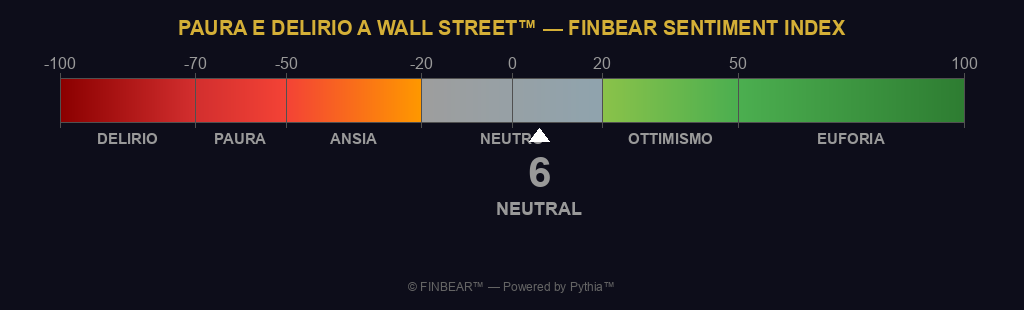
Fear & Loathing exits the ANXIETY zone for the first time since February 25, the day the Iran war sent the index plunging to -72 (DELIRIUM). The return to neutral territory is not euphoria — it is the compression of the panic premium. The VIX at 20 (not 12), the Crypto Fear & Greed at 17 (not 50), and gold rising alongside equity all signal that the market has removed the panic mask but has not yet put on the confidence one. If the Islamabad talks go badly, -26 is one tweet away.
🔗 Cross-Cutting Synthesis
The thread running through today’s RADAR is singular: the compression of the geopolitical risk premium. The US-Iran ceasefire is the catalyst, and everything else is derived from it or amplified by it. Oil crashes 16% because the $14/barrel war premium dissolves in hours. Global equity surges because the escalation risk that weighed on every portfolio since February 25 transforms into a hope for peace. Samsung benefits doubly: record earnings confirm the AI economy works regardless of war, and the reopening of Hormuz could unblock the helium shipments from Qatar that were threatening production. SpaceX files the largest IPO in history in the middle of the chaos — an act of confidence (or hubris) in the future.
But the compression of the premium is not its elimination. The macro traders who lost a generation of performance in March are the monument to what happens when models lack a geopolitics variable. The New Yorker investigation of Altman is a reminder that the concentration of power in AI carries governance costs the market has yet to price. And Vietnam rising to Emerging Market status is the signal of a world reorganizing — capital seeking destinations less exposed to Middle Eastern chokepoints.
The dissonance is in gold: +2.90% on a day of pure risk-on. Whoever is buying gold today does not fully believe the truce — or at least, is purchasing protection against its failure. And with the Crypto Fear & Greed at 17 (Extreme Fear) while Bitcoin gains 3.5%, the disconnect between price and sentiment is complete. The market is moving, but the market’s gut is not convinced.
Cui prodest? Those long equity and short volatility — the truce trade. But also those selling the peace knowing it is temporary. Trump gets the political win. Iran buys two weeks of breathing room and negotiating legitimacy. The bankers gear up for SpaceX. Korean chipmakers fire up the furnaces. And the 20,000 seafarers stranded in the Gulf hope that “safe passage” actually means something.
📌 Thesis invalidation — The dominant thesis of this RADAR is: the compression of the geopolitical premium is real but fragile, conditional on 14 days of negotiations. It is invalidated if: (1) the Islamabad talks on Friday fail or are cancelled, or (2) Iran unilaterally restricts Hormuz transit before the two-week deadline. By: April 21, 2026 (truce expiry). In that case: the FINBEAR reading shifts from “premium compression” to “accelerated re-accumulation” — the market would not return to -26 (ANXIETY) but potentially to -40/-50 (FEAR border), because a failed ceasefire is psychologically worse than a continuous war.
🚨 Strategic Alerts
🚨 Islamabad talks (Friday, April 10)
First test of the truce. If Vance and the Iranian delegation fail to establish a negotiating framework, the market reprices risk instantly.
🚨 Hormuz transit — first 48 hours
Monitor whether the first ships actually depart. Iran’s “technical limitations” are a potential friction point. If traffic does not resume by Thursday-Friday, the risk premium returns.
🚨 SpaceX public S-1
Expected late April/May. The S-1 will contain real numbers for the first time (revenue breakdown, Starlink margins, space CapEx). The market will react to data, not hype.
🚨 Q1 earnings season
Samsung is the first signal — if AI memory confirms across the board (SK Hynix report, TSMC April guidance), the tech rally has legs. If it disappoints, today’s rally is a truce bounce, not a trend.
🚨 Truce expiry, April 21
Natural deadline. The market will begin repricing risk 3–5 days before expiry — around April 16–18.
🚨 FOMC minutes and Fed reaction
Truce-driven disinflation could reopen the rate-cut debate. Monitor the next minutes release.
📜 Disclaimer & Fantiborsa Maxim™
🔱 FINBEAR™ Disclaimer:
This document is not financial advice, nor an investment recommendation. It is independent analysis for educational and informational purposes only. If you mistake a bulletin written at six in the morning for a buy order, the problem is not the bulletin — it is the finger pressing “buy” without reading the disclaimer. Markets can move against you with the same velocity they moved in your favor today. The ceasefire lasts 14 days — your mortgage lasts 30 years. Act accordingly.
© FINBEAR™ — Powered by Pythia™ — All rights reserved
🐻 Fantiborsa Maxim™ of the day:
“Fourteen days: the time it takes a market to forget six weeks of terror, and the time it takes a truce to become another war. Anyone buying peace with an expiry date should at least know the cost of renewal.”
© FINBEAR™ — Powered by Pythia™ — All rights reserved — 2026-04-08
‹ Torna all'Osservatorio