
UNDERSTAND FIRST, THEN ACT
About Us
What FINBEAR is
FINBEAR began as a financial analysis blog. Over time it became something more: an Independent Business School, in editorial form — for those who want to understand the markets, not be told what happened.
We offer understanding, not signals to execute blindfolded. You will not find “buy here, sell there”. You will find the instruments to understand why the market moves, who benefits, and what it means for you.
We live in a world that pushes you to trade always, and in a hurry. Trading advertising is one giant “click here”: don’t miss out, get in now, do it from the bus. All consumed in thirty seconds. FINBEAR chooses the opposite road, the hard one: depth. Our content asks for attention, and the will to go past the headline. It is not a limitation — it is the method. It is Slow Trading.
Why “Slow”
Because it is the opposite of what ruins almost everyone: haste without understanding.
There is a fast way to be in the markets — reacting to the chart tick by tick, chasing the signal, getting in because “it’s running” — without ever asking why it moves. It is the world of the chartist reading candles in a vacuum, of the copy-trader, of the “click here”: there, the chart is everything. With us, the chart is the last line of a longer story.
We use technical analysis too — it is one of the method’s five functions. But we keep it inside a wider frame: first the context — macro, geopolitics, game theory — then the hypothesis, and finally the chart that confirms or denies it. Technical analysis describes what is happening; on its own it never explains why. And without the why, a level is just a line on a screen.
No technique, on its own, “wins”: if it printed money automatically, the market would erase it in a flash. What can be done is to read better — understand the context, weigh the probabilities, write the invalidation first.
Understand first, then act. That is Slow Trading, explained.
Like a research desk, without the conflicts.
The way we work is modelled on the research and strategy desk of an investment bank, not on the retail of signals: context, thesis, scenarios, breaking levels, risk management. With one difference in your favour. A bank has a book to defend and a “buy” rating to sell; we don’t. We are independent: no stock to place, no tailored recommendation, no target price thrown out to make headlines. We keep the institutional rigour and leave the conflicts by the roadside — which is exactly why we can be explicit about uncertainty: scenarios and probabilities, not the prophecy of the single number.
We don’t give you more data than a professional terminal. We give you what a terminal doesn’t: a reading.
It is not an opinion: ESMA reports that between 74% and 89% of retail accounts lose money on leveraged products. Not because the chart is cursed — but because speed, leverage and the absence of a why do the rest.
Why you can trust us
What we are NOT
Let’s be honest. If going fast has left you more scars than gains, then try another road. And if you are among the few who win consistently? Sincere congratulations: carry on — this page is not for you. We are here for everyone else.
Our mission
To give investors a financial education of the highest standard: training analytical skill, not offering shortcuts. We want readers who decide with their own heads and can find their bearings in the present, without the illusion of predicting the future.
We don’t sell prophecies. We offer orientation: method, probability, scenarios, discipline.
Who is behind it
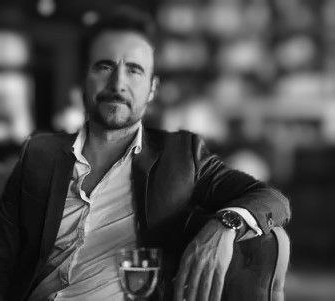
The newsroom is led by Antonio Fantigrossi: a cum laude graduate in Economics, a trader for over thirty years. FINBEAR began as a blog — the need to leave a voice. And not only on the markets: finance, geopolitics, game theory, history, philosophy, culture. Because to understand markets you must understand the world that moves them. Then came the question of every trader who won’t settle for what the market offers: what would I want to find, that doesn’t yet exist? From there came the RADAR ecosystem — with the Academy and the other instruments: method and depth instead of bare signals, orientation instead of prophecies. Because markets are read with patience.
Around him, an independent newsroom built on a method. No gurus, no providential man who “guesses” the market: in their place five functions, one process — the FINBEAR Pentagramma.
And there is a voice, Fantiborsa: erudite, sharp, a shade sardonic. It sells you no consolations — it dismantles illusions with irony and, when needed, a quotation.
Trading deserved a hero.
It got Fantiborsa.
Which is far worse — and infinitely more fun.
How we read the markets
Every analysis is born of the FINBEAR Pentagramma — five functions, each with a precise task:
Il Pretore opens the case file: it asks the right question;
the CTM drafts the report: it analyses price, risk and context;
the RADAR follows the record: it separates useful news from noise;
the Playbook weighs operability: it turns the scenario into conditions;
and in the end the price on the chart writes the verdict: the market always has the last word.
The Pythia of the Markets adds the lens of probability — the oracle of the possible, not destiny.
→ The method in detail, on the Method pageWhere to find us
“After the close, we are all Warren Buffett.”
We are a newsroom, not a guru with a crystal ball. Educational content only — not investment advice, not a solicitation of public savings: we teach you to read the markets; we don’t sell prophecies, nor do we tell you what to do with your money. Results, real or simulated, are no guarantee of future performance. The head, and the decisions, remain yours — we train them.