RADAR PRO ELITE™ FINBEAR — October 29, 2026
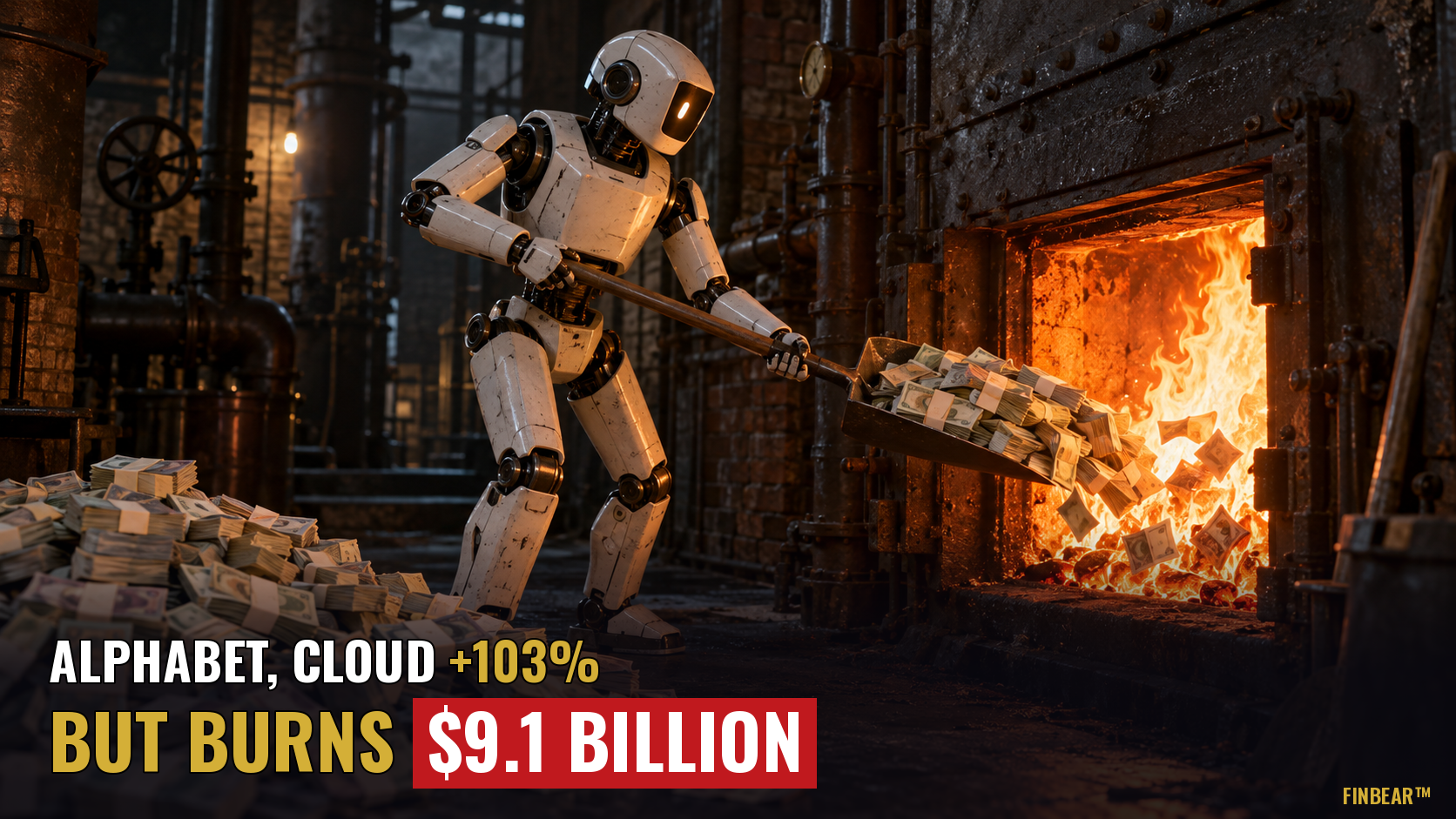
On Wednesday the Fed holds rates, but two committee members vote to raise them: a governor and a district president hadn’t dissented together since 1992. After the close the market splits Big Tech in two: Microsoft grows its cloud and spends less than expected, and gains 4%; Alphabet doubles its cloud but burns $9.1 billion of cash, and loses more than 9%. Oracle gains 10.73% on a promise of cash in 2029, ServiceNow loses 15% after earnings. The 10-year yield rises to 5.05%, crude closes higher and this morning slips on Vance’s letter to Tehran. GDP and PCE inflation are out at 1:30 p.m. CET; tonight, Amazon’s and Intel’s earnings.
Table of Contents
- 🧭 Before You Open the Terminal
- Key Indicators Dashboard
- 🗿 The Pretore Today
- 🧭 Compass of the Day
- 📐 Yield Curve
- 🏦 Banks: Large vs Regional
- Executive Summary
-
News in Detail
- 1. The Fed holds rates, but Cook and Hammack vote to raise them: a dissent not seen since 1992
- 2. Two reports, two verdicts: Microsoft gains 4% with Azure up 48%, Alphabet loses more than 9% with free cash flow of −$9.1 billion
- 3. Software split: Oracle gains 10.73% on a promise of cash in 2029, ServiceNow loses 15% after earnings
- 4. Samsung posts a record quarter, but the chip division disappoints: the stock loses almost 5% and Seoul closes down 1.24%
- 5. Crude closes higher and slips this morning on Vance’s letter to Iran; Washington warns the Gulf of a possible resumption of operations after the vote
- 6. The 10-year returns to 5.05%, gold closes on the Pretore’s threshold and silver loses 1.54%
- 📰 In Brief
- Aggregated Sentiment Table
- Fear and Loathing on Wall Street™
- Cross-Cutting Synthesis
- Strategic Alerts
- Disclaimer & Maxim
🧭 Before You Open the Terminal
🏛️ The Fed: on hold, but divided
Rates stay in the 3.75%-4.00% range on a ten-to-two vote: Lisa Cook and Beth Hammack wanted a quarter-point hike. 🔥 A governor and a district president hadn’t dissented on the same side since October 1992. The market puts the odds of a hike on December 9 at about 85%.
🏢 Big Tech: two reports, two verdicts
Microsoft beats expectations with Azure up 48% and gains 4% after the close. Alphabet grows its cloud by 103%, but earnings per share fall to $2.12 and the quarter’s free cash flow is −$9.1 billion: the stock loses more than 9% after the close. This morning Nasdaq-100 futures are down 1.26%.
🏛️ Yield curve
The 10-year yield rises six basis points to 5.05%, the 2-year falls to 4.67%: the curve steepens at the long end, while the Fed repeats that inflation “remains elevated.”
🌏 Chips and Seoul
Samsung posts a record operating profit, but its chip division misses expectations: the stock falls almost 5% and the KOSPI closes down 1.24%, after Wednesday’s 6.63% gain.
🛢️ Oil
On Wednesday Brent closes at $115.32 (+1.3%) and WTI at 102.78 (+2.88%); this morning Brent slips toward 114 on news of a letter from Vance to Tehran to reopen talks.
Verdict
🔴 High priority — Fantiborsa’s take: the Fed has discovered dissent, and the market has discovered the difference between spending and burning. Microsoft spends and banks the cash, Alphabet spends and borrows, Oracle promises it will stop burning cash and takes off. Today at 1:30 p.m. CET the PCE says what money costs; tonight Amazon says how much of it it spends.
Trust me: today it’s worth finding five minutes to read the whole thing ☕
Key Indicators Dashboard
| Indicator | Value | Change | Reading | Signal |
|---|---|---|---|---|
| S&P 500 | 7,743.98 | +0.28% | RSI 53.0; above SMA50 (7,698.05) and SMA200 (7,302.71); third straight gain; Pretore active long | |
| Nasdaq (COMPQ) | 26,549.85 | +0.27% | RSI 48.9; below SMA50 (26,589.67), above SMA200 (25,033.55); Pretore active long | |
| Nasdaq-100 (NDX) | 29,813.16 | +0.55% | RSI 49.4; on SMA50 (29,813.34), above SMA200 (27,894.40); Pretore active long, invalidation at −0.05% | |
| Philadelphia Semi (SOX) | 11,684.00 | +1.75% | RSI 48.5; below SMA50 (11,894.21), above SMA200 (10,747.61); Pretore active long | |
| Dow Jones | 52,475.10 | +0.19% | RSI 55.8; above SMA50 (52,253.60) and SMA200 (50,576.58); Pretore active long | |
| Russell 2000 ETF (IWM) | 281.29 | +0.40% | RSI 53.7; below SMA50 (285.00), above SMA200 (278.53) | |
| VIX | 16.91 | −3.48% | Above SMA50 (16.07), below SMA200 (18.23); Pretore active short on its reference ETF | |
| US 2Y | 4.67% | −3 bp | The short end falls after the Fed | |
| US 10Y | 5.05% | +6 bp | Back above the 5% threshold | |
| 2s10s spread | 38 bp | +9 bp | Positive, steepening at the long end | |
| DXY | 102.19 | −0.13% | RSI 59.7; above SMA50 (100.76) and SMA200 (99.62) | |
| Gold | 4,051.60 | −0.56% | December contract; below SMA50 (4,308.51) and SMA200 (4,523.07); Pretore active long; 4,039.40 this morning | |
| Silver | 53.46 | −1.54% | RSI 29.3; below SMA50 (62.12) and SMA200 (71.09); Pretore active short | |
| WTI | 102.78 | +2.88% | Above SMA50 (94.30) and SMA200 (86.13); Pretore back to active long; 101.82 this morning | |
| Brent | 115.32 | +1.26% | Above SMA50 (102.70) and SMA200 (92.18); Pretore active long | |
| EUR/USD | 1.1144 | −0.07% | This morning; RSI 26.2; below SMA50 (1.14) and SMA200 (1.16) | |
| BTC | 79,747.52 | −1.51% | This morning; below SMA50 (81,918.34), above SMA200 (73,111.80); Pretore turns to active long | |
| ETH | 2,303.55 | −2.30% | This morning; below SMA50 (2,530.80), above SMA200 (2,159.39); Pretore turns to active long | |
| Crypto Fear & Greed | n/a | — | Current value not available in session |
Equity indices, VIX, dollar, gold, silver and crude at the close on Wednesday, October 28, 2026 (StockCharts/Yahoo Finance; gold is the December contract). Treasury yields: official U.S. Treasury data for October 28 compared with October 27. Euro, crypto and this morning’s values: Yahoo Finance, screenshots taken between 8:52 and 8:53 a.m. CET.
The Pretore Today
U.S. index signatures. The S&P 500, the Nasdaq-100, the Composite, the Dow and semiconductors stay in active long; the VIX, read through its reference ETF, stays in active short. Compared with yesterday, semiconductors are back inside the tolerance band around their Consensus, though they still close 0.31% below it, and their signature no longer reads as attenuated. The SOX Consensus is still computed on uniform weights, because the index's volume isn't reliable.
Polarity flip: yes. WTI moves from the short_attiva recorded on the close of Tuesday, October 27, to long_attiva; bitcoin and ether also move from short_attiva to long_attiva.
The awkward signatures. The first is how thin the cushion is. The Nasdaq-100 closes just 0.05% above the level that would invalidate its long signature, and this morning its futures are down 1.26% after Alphabet's earnings; the financial sector (0.17%), gold (0.11%), WTI (0.14%) and bitcoin (0.12%) are on the edge too. The second: WTI and bitcoin turn long on Wednesday's close, but this morning both trade below their new invalidation level. The third is gold, which closes 14 cents below the threshold given yesterday and stays long only because the Pretore's threshold has moved lower.
Macro convergence. The dollar, read through its ETF, stays in active long; the euro, also through its ETF, in active short. On rates the Pretore works off an ETF holding 7–10-year Treasuries, in active long: a long signature on the ETF means falling yields, but on Wednesday the 10-year yield rose six basis points and the ETF's cushion over its Consensus narrowed. Brent and WTI are both in active long.
$SPX operating levels: close 7,743.98 · AVWAP Consensus 7,706.95 (+0.48%) · closing invalidation 7,616.58 (−1.65%). The AVWAP Consensus is the volume-weighted average the Pretore uses as a structural anchor for prices. The invalidation is the level below which, on a closing basis, the long signature lapses: it is not a stop-loss order.
The overall read. Index signatures stay long and the S&P 500 widens its cushion over its Consensus slightly: on paper, the picture is constructive. Today's thesis, though, looks elsewhere, at the line the market is drawing between those who spend out of cash and those who spend on credit, and on that the Pretore agrees only halfway. The Nasdaq-100, where Alphabet and AI suppliers carry weight, goes into the session five hundredths of a percentage point from its invalidation, while falling futures point to a shaky open: that's where the signature can change first.
Snapshot as of October 29, 2026 (reference close October 28).
Compass of the Day
FINBEAR Compass™ · $SPX · Oct 28, 2026
  VERDICT           CONTRADICTED     — recent momentum contradicts the regime
  OPERATING REGIME  Sideways
  LINEARITY         Non-linear trends
  COHERENCE         MIXED
  RELIABILITY       SUSPENDED
  POSITION          in band          — below the underlying trend
  UNDERLYING TREND  Persistent bull  — solid
The Compass captures an S&P 500 that has risen for three sessions inside an operating regime that is still sideways: recent momentum contradicts the regime, but the signal is scattered and the trend can't be read with confidence, so the compass says to wait. The underlying trend is still a solid bull: the weakness of recent months reads as a tactical correction, not the end of the cycle, with price inside the band and just below the trend line.
On the Nasdaq-100, the Composite and semiconductors the Compass measures a strong-bear operating regime with reliability suspended: the bounce of the past few days hasn't changed the picture of the last few months yet. The Dow and the financial sector are still the only ones, among the indices and sectors we follow, with a strong-bull operating regime; for the financial sector, though, the underlying trend is less solid.
Yield Curve
U.S. Treasury Curve · Oct 28, 2026
  SHAPE       flat
  MOVEMENT    bear steepening
  MACRO       normal
For the economy: after the Fed, the short end falls and the long end rises. The market believes the central bank will keep policy rates on hold for now, but it wants more compensation to lend for ten and thirty years to an economy the Fed itself calls "strong," with inflation that "remains elevated."
For banks: a curve steepening at the long end, in theory, widens the gap between funding costs and loan yields, and helps net interest margin. On Wednesday, though, only the large banks picked up on it, as the next panel shows.
Banks: Large vs Regional
XLF · KBWB · KRE — financial sector
- XLF (sector) — at 56.13 (+0.45%), inside the 55.89–56.18 zone that acted as resistance on Tuesday: the engine still shows price trading within the zone; the Pretore's signature on the sector stays in active long, with a closing invalidation at 56.035 (−0.17%).
- KBWB (large banks) — at 89.16 (+0.63%), inside the 88.70–89.42 zone; on Tuesday the resistance ran from 88.70 to 89.24, and the shift to support has yet to be confirmed; the next resistance is at 90.04–90.17.
- KRE (regionals) — at 72.11 (−0.65%), below the 72.42–73.24 zone; the nearest support is at 70.97–71.93.
For the second session in a row the large banks rise and the regionals slip. This time the curve doesn't explain the gap: steepening at the long end should help those who live on interest margin most of all. The large banks are back inside the zone that stopped them on Tuesday, the regionals are slipping below the one they were trading in: we're watching it, not betting on it.
KBWB and KRE under watch — a reading, not a signal.
Executive Summary
🎬 The day in one line
The S&P 500 rises for a third straight session, up 0.28% to 7,743.98, on the day the Fed holds rates and the 10-year yield returns to 5.05%. After the close, earnings split Big Tech, and this morning Nasdaq-100 futures are down 1.26%.
🏛️ A Fed that stands still, but argues
🆕 Ten votes to two: Lisa Cook and Beth Hammack call for a hike, and Kevin Warsh announces that from 2027 one of the year’s eight meetings will be devoted to strategy alone, with no rate decision. The statement calls the economy “strong” and inflation “elevated.” This is how Warsh describes the effect of tightening so far, adding that there are no firm conclusions yet:
“The overwhelming consensus is that what we’ve done in this monetary medicine is starting to work some”
🏢 Spending or burning
- Microsoft banks it. Revenue of $92.3 billion (+19%), Azure at $33.2 billion (+48%) and capital spending below the expected ceiling: +4% after the close.
- Alphabet burns it. Cloud at $30.7 billion (+103%), but $51.4 billion of capital spending in the quarter, free cash flow of −$9.1 billion and earnings per share of $2.12: down more than 9% after the close.
- Oracle promises. Free cash flow of at least $30 billion in fiscal 2029 and a cap of a further $20 billion on capital-market funding, excluding refinancing: +10.73%, its best gain since May.
🛢️ Barrels and diplomacy
Brent closes at $115.32 and this morning slips toward 114 on Vance’s letter to Tehran, which Trump plays down; according to the Wall Street Journal, Washington has warned Gulf countries of a possible resumption of military operations after the November 3 vote.
⏳ The bottom line
The October 23 tech-correction thesis expired last night without being invalidated: semiconductors are above the threshold, the S&P 500 isn’t. Today hinges on three events: GDP and the PCE at 1:30 p.m. CET, Amazon and Intel tonight. Meanwhile the Nasdaq-100 comes into the day a step away from the level that would make the Pretore’s long signature lapse.
News in Detail
1. The Fed holds rates, but Cook and Hammack vote to raise them: a dissent not seen since 1992
What happened
✅ On Wednesday, October 28, the Fed keeps the fed funds rate in the 3.75%-4.00% range on a ten-to-two vote (Yahoo Finance). ✅ Lisa Cook, a governor, and Beth Hammack, president of the Cleveland Fed, vote for a quarter-point hike (Yahoo Finance). ✅ It’s the first time since October 1992 that a governor and a district president have dissented on the same side (Fortune via WDC TV). ✅ Where in September the statement announced a hike, it now announces rates on hold, and the economy’s growth goes from solid to strong (Yahoo Finance).
✅ Kevin Warsh announces that from 2027 one of the eight annual meetings will be devoted to strategy, with no statement and no rate vote; in 2028 there will be two strategy meetings and six with a decision (Yahoo Finance).
📊 Rate futures put the odds of a hike on December 9 at about 85% (Bloomberg via Yahoo Finance). 📊 For September 2027 they price a rate of around 4.7% (Bloomberg via Yahoo Finance). ✅ September consumer price inflation stands at 3.7%, core at 2.6% (Yahoo Finance). ✅ The 10-year yield closes at 5.05% (+6 basis points), the 2-year at 4.67% (−3) (U.S. Treasury). The October 28 RADAR wrote that the Fed would decide that evening “what December costs”: the price hasn’t come down, and two committee members wanted to collect it in October already.
What sources say
“Inflation remains elevated.” — statement of the Fed’s monetary policy committee
“Politics played no role in the decision” — Kevin Warsh, Fed chair (Yahoo Finance)
FINBEAR Take: ten wait, two want to tighten now
Ten votes to wait, two to hike right away, none to cut: the risk of another tightening stays on the table, but the vote doesn’t settle the outcome. The joint dissent of a governor and a district president, unseen for thirty-four years, says that inside the committee patience has its limits, and the statement confirms it by upgrading the economy from “solid” to “strong.” That’s the language of someone preparing the ground, not clearing it.
The Treasury market translates it. The 2-year yield falls because, a week before the vote, the Fed chose not to move; the 10-year rises because the same Fed admits inflation is elevated and the economy is running hot. The calendar reform adds a subtext: fewer rate-setting meetings raise the stakes each time the committee votes. Warsh insists politics played no role; the market, meanwhile, has already priced December in.
Cui prodest? Those holding cash and short-dated paper yielding more than 4%, with a Fed in no hurry to cut. The losers are those holding long-dated bonds, who foot the bill for the inflation the Fed itself admits to.
For investors
Instruments involved:
- ETFs: $SHY, $IEF, $TLT, $UUP, $KBWB
- Futures/Commodities: fed funds (ZQ), 2-year (ZT) and 10-year (ZN) futures
- Currencies: euro vs. dollar
- Options/Structures: options on $TLT to hedge a further rise in yields
Opportunities:
The short end yields more than 4%, while the market still prices a possible December hike; the long end is back above 5%
Risks:
A hot September PCE, out today at 1:30 p.m. CET, would make December a formality and could push the 10-year higher still
What to avoid:
Reading the pause as a truce: two votes out of twelve were already calling for a hike
Bottom line:
The Fed held rates steady; it didn’t put an end to tightening.
Impact: (2/5) — Two votes for a hike, 10-year above 5%, December at 85% · against the grain: short-dated cash favored
2. Two reports, two verdicts: Microsoft gains 4% with Azure up 48%, Alphabet loses more than 9% with free cash flow of −$9.1 billion
What happened
✅ Microsoft closes the first quarter of fiscal 2027 with revenue of $92.3 billion (+19%), operating income of $45.9 billion (+21%) and earnings per share of $4.92 (+32%); cloud revenue reaches $63.9 billion (+30%) and Azure $33.2 billion, up 48% (Microsoft). ✅ Analysts expected revenue of $90.69 billion and adjusted earnings per share of $4.73, against the $4.89 reported (SiliconANGLE).
✅ Capital spending, including finance leases, is $45.2 billion, against a top estimate of 50.67; free cash flow falls 27% to $18.63 billion (SiliconANGLE). 📊 For the current quarter the company guides to revenue of $96 billion to $97.1 billion and Azure growth of 49%-50% in constant currency (SiliconANGLE). ✅ The stock rises about 4% after the close (SiliconANGLE).
✅ Alphabet reports revenue of $127.6 billion (+25%) and operating income of $40.6 billion; Google Cloud brings in $30.7 billion (+103%) with operating income of $11.1 billion (Alphabet). ✅ Diluted earnings per share fall to $2.12 from $2.87, weighed down by an $8.7 billion loss on equity securities that cuts diluted earnings per share by 55 cents (Alphabet); analysts expected $3.01 (The Motley Fool).
✅ Capital spending in the quarter rises to $51.4 billion, from $24 billion a year earlier, and free cash flow is −$9.1 billion (Alphabet). ✅ Long-term debt rises to $125.1 billion from $21.6 billion at September 30, 2025; 📊 for 2027 the company expects capital spending above $300 billion (SiliconANGLE). ✅ The stock, which had gained 1.34% in the session, loses more than 9% after the close (Yahoo Finance; SiliconANGLE). ✅ This morning at 8:52 a.m. CET Nasdaq-100 futures are down 1.26% (Yahoo Finance).
The October 28 RADAR wrote that Microsoft and Alphabet had to show that AI spending shows up in cloud revenue: both showed it, and the market still judged them in opposite ways.
What sources say
“We still have demand that exceeds supply” — Amy Hood, Microsoft CFO (SiliconANGLE)
“Google Cloud revenues grew 103%, powered by huge demand for our AI infrastructure and AI solutions.” — Sundar Pichai, Alphabet CEO (earnings release)
FINBEAR Take: the market isn’t judging growth, it’s judging who pays the bill
On paper, Alphabet won: a cloud that doubles in a year beats an Azure growing by half. The market looked at a different column, the cash. Microsoft spends $45 billion and is left with $18.6 billion of free cash flow; Alphabet spends 51.4 and ends the quarter with cash flow $9.1 billion in the red, and long-term debt nearly six times its level a year earlier. One grows on its own money; the other is starting to grow on its creditors’.
The earnings detail makes the read worse without changing it. The loss on equity securities is an accounting one and, without it, earnings per share would be close to $2.67: still below expectations. What weighs more than the 55 cents is the confirmation of more than $300 billion of capital spending in 2027. It’s the same pattern seen with Meta and Broadcom in recent weeks: as long as spending produces cash the market applauds, and when it eats cash the market sends the bill.
Cui prodest? Those selling Alphabet chips, memory and power, who see their order books grow again. The loser is Alphabet’s shareholder, who funds the spending with the company’s cash and, from this year, with debt too.
For investors
Instruments involved:
- Stocks: $MSFT, $GOOGL, $GOOG, $AMZN, $META, $NVDA, $AVGO
- ETFs: $QQQ, $XLK, $XLC
- Futures/Commodities: Nasdaq-100 futures (NQ)
- Options/Structures: options on $QQQ to hedge the reaction to Amazon’s earnings
- Other instruments: corporate bonds via $LQD
Opportunities:
Microsoft guides to an accelerating Azure with capital spending below expectations; Alphabet’s spending props up demand for its suppliers
Risks:
An Amazon that follows Alphabet’s pattern tonight would extend the punishment to all of Big Tech investing on credit
What to avoid:
Reading cloud growth as proof of profitability: what counts is how much cash is left after capital spending
Bottom line:
The market pays those who spend and bank the cash, and punishes those who spend and borrow.
Impact: (2/5) — Alphabet burns cash, Nasdaq-100 futures at −1.26% · against the grain: chip and power suppliers favored
3. Software split: Oracle gains 10.73% on a promise of cash in 2029, ServiceNow loses 15% after earnings
What happened
✅ At its investor day in Las Vegas, Oracle projects free cash flow of at least $30 billion in fiscal 2029, which ends in May, with a return to positive territory in the second half of fiscal 2028 (Yahoo Finance; Stocktwits). ✅ The company confirms its target of at least $225 billion of revenue in fiscal 2030 and caps further capital-market funding through May 2030 at $20 billion, half in equity and half in gross debt: refinancing of existing debt and the $20 billion of shares already placed in the first quarter of fiscal 2027 are excluded (Oracle). ✅ In the fiscal year ended May 2026, free cash flow was −$23.7 billion (Stocktwits).
✅ The stock closes at $144.54 (+10.73%) on volume of 79.1 million shares, about 161% above its three-month average (Yahoo Finance): its best gain since May, though the stock is still down about 26% since the start of the year (Stocktwits).
✅ ServiceNow closes the third quarter with revenue of $4.106 billion, just above the 4.09 expected, and subscription revenue of $3.988 billion (+21%); adjusted earnings per share are $1.00 against $1.02 expected (AskTraders). ✅ For the fourth quarter the company expects current remaining performance obligations (cRPO), contracted revenue due to be recognized over the next twelve months, to grow 18.5% in constant currency, after 21% in the third, and adjusted subscription gross margin falls to 80% from 83% a year earlier (AskTraders). ✅ For full-year 2026 the company raises its subscription revenue outlook to $15.78 billion to $15.79 billion (ServiceNow). ✅ The stock closes at $150.13 (−3.00%) and loses about 15% after the close, to 127.08 (AskTraders).
What sources say
“Vendor financing, customer-provided hardware and customer prepayments are expected to reduce upfront cash requirements.” — Oracle, investor day release of October 28
“Our customers have validated our strategic relevance as the single harness for enterprise intelligence and security.” — Bill McDermott, ServiceNow CEO (earnings release)
FINBEAR Take: the market is buying the date the cash drain ends
Oracle burned almost $24 billion of cash in its last fiscal year and on Wednesday rose 11%: not because it has stopped burning cash, but because it said when it will stop. The decisive detail is how it plans to get there. Vendor financing, hardware supplied by customers and prepayments: the spending stays, but part of the bill moves to someone else. It’s the same formula seen on Tuesday with Broadcom and Anthropic, read from the other side of the counter.
ServiceNow tells the opposite side of the software story. Revenue holds up, but subscription margin falls and growth in contracted revenue slows: the market fears that artificial intelligence, instead of adding customers, squeezes the price paid by the ones it already has. On the same evening Alphabet is punished for spending and ServiceNow for earning less on every subscription: those who sell infrastructure get paid, those who sell licenses have to prove they’re not its victims.
Cui prodest? Oracle’s shareholders, who get a date for the return to positive cash flow, and the suppliers who finance part of the spending. The losers are those selling subscription software, who have to prove they won’t be replaced by the very tools they resell.
For investors
Instruments involved:
- Stocks: $ORCL, $NOW, $CRM, $SAP, $IBM
- ETFs: $IGV, $XLK
- Futures/Commodities: Nasdaq-100 futures (NQ)
- Options/Structures: options on $NOW to hedge post-earnings volatility
Opportunities:
A date for the return to positive cash flow lowers the perceived risk for data-center builders
Risks:
2029 and 2030 targets still a long way off; in subscription software, falling margins and slowing growth in contracted revenue
What to avoid:
Reading Oracle’s gain as an upgrade for all of software: on the same evening ServiceNow lost 15%
Bottom line:
Oracle sells a date for the end of its cash burn; ServiceNow pays for doubts about its pricing.
Impact: — Oracle’s gain and ServiceNow’s slump cancel out across the sector
4. Samsung posts a record quarter, but the chip division disappoints: the stock loses almost 5% and Seoul closes down 1.24%
What happened
✅ In the third quarter Samsung Electronics reports operating profit of 107.4405 trillion won (+783.1%), its fourth straight quarterly record, on revenue of 195.2532 trillion (+126.9%) (Seoul Economic Daily). ✅ Operating profit beats the consensus estimate of 105.6764 trillion by 1.7%; the chip division posts revenue of 147.1 trillion won and operating profit of 106.5 trillion (Seoul Economic Daily). ✅ The company announces a dividend of 4,601 won a share, about 30 trillion won in total (Seoul Economic Daily).
✅ At 10:56 a.m. Seoul time the stock is at 230,500 won (−4.75%), after an early gain of as much as 2.89% (Seoul Economic Daily). ✅ The KOSPI closes at 5,937.66 (−1.24%) (Yahoo Finance), after Wednesday’s 6.63% gain. ✅ Ahead of the Wall Street open, Intel, AMD, Broadcom and Micron are lower (Stocktwits via Yahoo Finance).
✅ On Wednesday semiconductors rise 1.75% to 11,684.00 (StockCharts), with Micron up 5.86% and Nvidia down 1.17% (Yahoo Finance). ✅ Intel reports tonight after the close (Intel). The October 28 RADAR wrote that memory had become the bottleneck of artificial intelligence: this morning in Seoul the bottleneck is still there, but the market sold the producer that earned less from it than expected.
What sources say
“Expectations for semiconductor earnings had become extremely high” — securities industry official, unnamed (Seoul Economic Daily)
“Profit in the chip division came in below expectations, which appears to have soured investor sentiment.” — securities industry official, unnamed (Seoul Economic Daily)
FINBEAR Take: when expectations climb faster than profits
Samsung beats the consensus on overall profit, yet loses almost 5%. The market didn’t look at the record, it looked at the chip line, and above all at the comparison with SK hynix, which two days ago showed an 80% margin. After a 6.63% jump in the KOSPI in a single session, any result short of perfect becomes a chance to take profits.
For Wall Street the signal cuts both ways. Semiconductors have gained more than 5% in two sessions and remain below their 50-day average: they rose on expectations, and this morning the first Asian disappointment arrives together with an Alphabet that confirms more than $300 billion of capital spending in 2027. It’s the same supply chain that gains from Alphabet’s spending and loses on Samsung’s disappointment: tonight Intel will tell us which of the two wins out.
Cui prodest? SK hynix, which in the comparison between the two Korean producers remains the benchmark for AI memory. The losers are those who bought Korean chipmakers after Wednesday’s 6.63% gain.
For investors
Instruments involved:
- Stocks: $MU, $INTC, $AMD, $AVGO, $NVDA, $SNDK
- ETFs: $SMH, $SOXX, $EWY
- Futures/Commodities: Nasdaq-100 futures (NQ)
- Currencies: won vs. dollar
- Options/Structures: options on $SMH to hedge the swings
Opportunities:
Samsung’s overall profit is still a record and demand for memory isn’t in question
Risks:
Very high expectations across the whole supply chain; Intel’s and Sandisk’s earnings tonight
What to avoid:
Confusing a miss against expectations with a drop in demand
Bottom line:
Samsung didn’t let its customers down; it let down the people who had already bought the record.
Impact: (1/5) — Samsung’s chip miss, profit-taking across the supply chain
5. Crude closes higher and slips this morning on Vance’s letter to Iran; Washington warns the Gulf of a possible resumption of operations after the vote
What happened
✅ On Wednesday Brent closes at $115.32 (+1.3%) and WTI at 102.78 (+2.9%) (The National). ✅ In the week to October 23, U.S. crude inventories fall by 1.9 million barrels, against an expected increase of 15,000; gasoline inventories rise by 3.9 million, against an expected draw of 900,000 (EIA via HDFC Sky).
✅ This morning at 4:48 a.m. CET Brent is at $114.10 (The National); at 8:53 a.m. WTI is at 101.82 (−0.93%) (Yahoo Finance). 🔸 According to the Wall Street Journal, Vice President JD Vance sent a letter to Mohsen Rezaei, of Iran’s Supreme National Security Council, to reopen talks; Trump said he hadn’t ordered it and had authorized it at Vance’s request (The National).
✅ Qatari mediators delivered a draft proposal to Tehran; an Iranian official rejected it as a set of ideas rather than a formal offer (HDFC Sky). 🔸 Again according to the Wall Street Journal, Washington has warned several Gulf countries to prepare for a possible resumption of the military campaign against Iran after the November 3 elections (The National). ✅ The Saudi-led coalition says it intercepted a ballistic missile at dawn headed for the kingdom’s eastern region (HDFC Sky). The October 28 RADAR described crude as a pendulum swinging between talks and missiles: within twenty-four hours both forces acted at once, and the price held above $114.
What sources say
“No, what that is … they need help with medical supplies and various things.” — Donald Trump, on Vance’s letter (The National)
“Global inventories have fallen sharply, with pledged strategic oil reserves releases largely completed.” — Giovanni Staunovo, UBS (The National)
FINBEAR Take: diplomacy lowers the price, the calendar raises it
Vance’s letter takes a dollar off Brent, Trump’s backpedaling is a reminder that it isn’t a deal, and the warning to the Gulf sets a date: after Tuesday’s vote. That’s the data point the market is staring at. Brent doesn’t drop below $110, and the risk premium stays, because nobody knows whether next week will bring a deal or a resumption of operations, and falling inventories remove the cushion that held up in the spring.
The gasoline number complicates the Fed’s picture. More gasoline in storage while crude drains out of the tanks means refineries running and demand slowing, yet the price at the pump stays high. With September’s PCE out today and a Fed that admits inflation is elevated, oil above $100 remains the variable that can turn December from likely to certain.
Cui prodest? Crude producers outside the Gulf, who sell at wartime prices without exposing their own facilities. The losers are energy consumers, starting with airlines and with the American consumer on the eve of the vote.
For investors
Instruments involved:
- Stocks: $XOM, $CVX, $COP, $OXY
- ETFs: $XLE, $XOP, $USO, $BNO, $JETS
- Futures/Commodities: Brent (BZ), WTI (CL) and gasoline (RB) futures
- Options/Structures: options on $USO to hedge the swings
Opportunities:
Talks that genuinely restart would remove part of the risk premium, to the benefit of energy-consuming sectors
Risks:
A resumption of operations after November 3 would send Brent back toward its highs; falling crude inventories
What to avoid:
Reading Vance’s letter as a deal: Tehran rejected the draft and Trump played down the initiative
Bottom line:
Crude isn’t pricing a deal or a war: it’s pricing a date, next Tuesday.
Impact: (2/5) — Crude above $100, risk of new operations after the vote · against the grain: crude producers favored
6. The 10-year returns to 5.05%, gold closes on the Pretore’s threshold and silver loses 1.54%
What happened
✅ On Wednesday the 10-year yield rises six basis points to 5.05% and the 30-year to 5.37%, while the 2-year falls three basis points to 4.67% (U.S. Treasury). ✅ The long-dated Treasury ETF loses 0.78% (Yahoo Finance). ✅ The dollar index closes at 102.19 (−0.13%) and this morning the euro is at $1.1144 (StockCharts; Yahoo Finance).
✅ Gold closes at $4,051.60 (−0.56%) on the December contract and this morning is at 4,039.40 (−0.30%) (StockCharts; Yahoo Finance); in recent days it has hovered near three-month lows (InvestorsHub via Yahoo Finance). ✅ Silver closes at 53.46 (−1.54%) (StockCharts).
✅ The Pretore’s signature on gold stays in active long, with a closing invalidation at 4,047.13, 0.11% below the close; the one on silver stays in active short (Pretore dei Mercati™). The October 28 RADAR gave gold a threshold at 4,051.74: the close ended 14 cents lower, but the signature holds because the Pretore has moved its own threshold.
What sources say
“But inflation remains elevated.” — Kevin Warsh, Fed chair, press conference (Yahoo Finance)
No direct statements attributable to primary sources are available on the metals’ moves.
FINBEAR Take: opportunity cost has a name, and it’s 5%
With the 10-year at 5.05% and cash paying more than 4%, holding gold is expensive: it’s an asset that pays no coupon in a market that pays generous ones. That’s why gold reacts neither to the war nor to oil above $100, and drifts toward three-month lows. The Fed has taken away gold’s simplest argument: money getting cheaper again.
The detail of the curve shows where the pressure is concentrated. It’s long yields that are rising, not short ones: the market doesn’t fear a Fed that hikes tomorrow, it wants a premium for holding long-dated bonds with inflation at 3.7%. It’s the kind of rise in yields that weighs on the valuations of tech stocks, whose cash flows sit furthest in the future, on the very day Alphabet confirms more than $300 billion of capital spending.
Cui prodest? Those holding interest-bearing cash and short-dated paper: they pay interest and, in the case of bonds, generally swing less than longer maturities. The losers are those who sought shelter in precious metals and long-dated bonds.
For investors
Instruments involved:
- ETFs: $GLD, $SLV, $GDX, $TLT, $IEF
- Futures/Commodities: gold (GC), silver (SI) and 10-year (ZN) futures
- Currencies: euro vs. dollar
- Options/Structures: options on $GLD to hedge a break of the threshold
Opportunities:
With the 10-year back above 5%, long-dated bonds again offer a yield above that threshold
Risks:
A gold close below 4,047.13 would make the long signature lapse; a hot PCE would push long yields higher still
What to avoid:
Buying gold as a defense against a hawkish Fed: with yields rising, it’s the metal that pays
Bottom line:
As long as the 10-year yields 5%, gold has to explain why it’s worth holding.
Impact: (1/5) — Long yields above 5% weigh on valuations · against the grain: short-dated cash favored
In Brief
- Bitcoin turns long, but slips this morning. On the Pretore's Wednesday close of $81,267.59, bitcoin clears the 80,970.35 threshold set by the October 28 RADAR and the signature flips from short to long; this morning at 8:52 a.m. CET it's at 79,747.52 (−1.51%), below the new invalidation at 81,172.62, which however only counts on a closing basis (Pretore dei Mercati™, Yahoo Finance). Bitcoin options worth between $11 billion and $12.2 billion, depending on the source, expire on Friday (Cryptonews via Yahoo Finance; CryptoTicker).
- Coinbase, the European deadline. Buying, selling and converting the 14 crypto-assets restricted under the EU's MiCA regulation are already blocked for Coinbase's retail customers in the European Economic Area: by October 30 they can only move them to a supported external wallet, after which Coinbase converts the remaining balances into USDC or another supported asset (CryptoSlate).
- SpaceX −2.25%. The stock closes at $145.23, among the session's most traded (Yahoo Finance); in Alphabet's results, the losses on equity securities include the one on SpaceX (The Motley Fool).
Aggregated Sentiment Table
| Cluster | Story | Sentiment | Score |
|---|---|---|---|
| 💰 Central Banks | The Fed holds rates, two votes to hike | Negative / tightening deferred, not cancelled | -8 |
| 🧠 AI & Tech | Microsoft rewarded, Alphabet punished | Negative / debt-funded spending punished | -10 |
| 🧾 Corporate | Oracle +10.73%, ServiceNow −15% | Neutral / software split | 0 |
| 🧱 AI Infrastructure | Samsung’s record, chips disappoint | Negative / profit-taking | -5 |
| 🔋 Energy | Crude between Vance’s letter and the vote | Negative / risk premium | -8 |
| 🥇 Precious Metals / Commodities | The 10-year at 5.05%, gold on the threshold | Negative / opportunity cost | -5 |
| Net Score | -36 |
Fear and Loathing on Wall Street™
Neutral — Index: 16

Registry comparison: the latest recorded reading is +17 (⚪ NEUTRAL, FEAR UNDER COMPRESSION) on October 28. Since then the S&P 500 has gained 0.28% and the VIX has fallen to 16.91, but the 10-year yield has climbed back to 5.05% and this morning Nasdaq-100 futures are down 1.26% after Alphabet’s earnings.
Reading. The index closes higher for a third time in a row and volatility falls further: on the surface, a market that has digested the Fed. Underneath, fear has changed its target. It’s no longer about what money will cost in December, which prices already reflect, but about who can afford to pay for it: Alphabet, which burns cash and takes on debt, is the first name the market has done the math on. It’s a selective fear, hitting one stock at a time and leaving the index almost unmoved.
Cross-Cutting Synthesis
The thread of the day is the difference between spending and burning. Microsoft invests $45 billion in a quarter and keeps $18.6 billion of cash: the market rewards it. Alphabet invests 51.4, ends with cash flow 9.1 billion in the red and long-term debt nearly six times as high: the market punishes it, even though its cloud more than doubles. Oracle still burns cash but says when it will stop, and rises 11%. ServiceNow burns nothing, but sells licenses that artificial intelligence could make cheaper, and loses 15%.
In the background, the Fed raises the price of that choice. Ten votes to wait and two to hike right away leave open the risk that money stays expensive for a long while yet, and the 10-year at 5.05% makes every dollar borrowed to build data centers more expensive. Oil above $100 and Washington’s warning to the Gulf keep alive the inflation risk the Fed itself admits to. Samsung shows the flip side of the chip party: when expectations run ahead of profits, even a record turns into a disappointment.
The Pretore confirms the long signature on the indices and the S&P 500 closes above its Consensus, but the Nasdaq-100 goes into the session five hundredths of a percentage point from its invalidation, with futures down 1.26%. The Compass doesn’t register a change of regime yet: the momentum of recent sessions contradicts an operating regime that is still sideways.
To invalidate its tech-correction thesis, the October 23 RADAR required the S&P 500 above 7,799.45 and semiconductors above 10,979.42 by Wednesday’s close: semiconductors got there, the S&P 500 didn’t, and the thesis expired without being either invalidated or confirmed. The October 27 RADAR’s thesis expires tonight and the October 28 one on Friday: with the S&P 500 at 7,743.98, neither threshold, 7,616.58 or 7,799.45, has been triggered. The conditions of the October 26 Week Ahead’s defensive thesis still don’t hold: the S&P 500 is above 7,680.63, the Nasdaq-100 above 29,190.35, the VIX below 18.19.
Cui prodest? Those who take in more than they spend, and those who lend short-term to the ones who spend too much. The bill falls on shareholders of companies funding artificial intelligence with debt, and on those selling software that the same artificial intelligence risks making less indispensable.
📌 Thesis invalidation — This RADAR’s dominant thesis is: the market no longer rewards AI spending as such; it rewards those who pay for it out of cash and punishes those who fund it with debt, while a divided Fed keeps the cost of money high.
- Holds because: Microsoft gains 4% with capital spending below expectations and positive cash flow, Alphabet loses more than 9% with free cash flow of −$9.1 billion, Oracle rises 11% on its promise of cash; two Fed members vote for a hike and the 10-year returns to 5.05%.
- Invalidated if: the Nasdaq-100 closes above 30,262.25, the nearest resistance flagged by the Pretore, and at the same time Amazon reports rising capital spending tonight without being punished; or if the Nasdaq-100 closes below 29,797.29, the level that voids the long signature, and at the same time the S&P 500 closes below its Consensus at 7,706.95: then selectivity turns into a broad sell-off.
- By: the close on Monday, November 2, after the PCE, Amazon’s and Intel’s earnings and the first session of November.
- In that case: above 30,262.25, together with a favorable reaction to Amazon, the FINBEAR reading shifts to a market that rewards spending again; below 29,797.29, together with an S&P 500 close below 7,706.95, it shifts to a broader sell-off confirmed by price.
Strategic Alerts
active long on the 7,743.98 close; closing invalidation at 7,616.58 (−1.65%); the Consensus at 7,706.95 sits below price.
active long on the 29,813.16 close; closing invalidation at 29,797.29 (−0.05%), with futures at −1.26% this morning.
active long; closing invalidation at 26,312.40 (−0.89%).
active long on the 11,684.00 close; closing invalidation at 11,207.91 (−4.07%).
active long on the 52,475.10 close; closing invalidation at 51,584.55 (−1.70%).
active long on the 56.13 close; closing invalidation at 56.035 (−0.17%).
active long on the 4,051.60 close; closing invalidation at 4,047.13 (−0.11%), already breached to the downside this morning.
active long on the 102.78 close; closing invalidation at 102.635 (−0.14%), already breached to the downside this morning.
active long on the 115.32 close; closing invalidation at 112.18 (−2.73%).
active long on the engine’s close of 81,267.59; closing invalidation at 81,172.62 (−0.12%), already breached to the downside this morning.
at 1:30 p.m. CET third-quarter GDP and September personal income and spending, with PCE inflation; at 10:00 p.m. CET Amazon’s earnings call; after the close, Intel’s earnings.
the midterm elections on Tuesday, November 3; the Fed’s next decision on Wednesday, December 9.
Disclaimer & Maxim
This RADAR is independent analysis for a general audience, not advice and not a recommendation. If you read a buy order into it, take it up with a licensed adviser — or your therapist. And remember Alphabet: revenue up 25%, a cloud that doubled, and −9% in a single evening. Being right about revenue isn’t enough; the money has to stay in the till. We don’t run anyone’s till — least of all yours.